• Menu
  • Skip to content

ss_site_title

Just another WordPress site

How to Use It

Cooling Down with Peach Leaves

July 21, 2019 //  by jessica.m.ricco@gmail.com//  4 Comments

Many plants have leaves that can be used as food or medicine and peach is no exception. 

I love everything about this wonderful leaf. I love the smell and taste in an elixir, I love that it is so simple and I really wish more people knew about it. Peach trees are in the Rose family and can help us cool down. 

For those summer headaches or headaches with nausea (if you live in Arizona, you know what I am talking about for sure), peach leaf is the thing.

To make a peach leaf tea, steep some peach leaves in cold water overnight. Strain and sip throughout really hot days. Heat kills the helpful compounds in peach leaves, so do not use hot water. It also helps relieve dry coughs, pollen irritation, and anxiety.

PEACH LEAF TEA

To make a peach leaf tea, steep some peach leaves in cold water overnight. Strain and sip throughout really hot days. Heat kills the helpful compounds in peach leaves, so do not use hot water. It also helps relieve dry coughs, pollen irritation, and anxiety.

PEACH LEAF ELIXER

Another easy way to use peach leaves is to make an elixir. 

  1. Fill a jar with leaves
  2. Add half a cup of honey
  3. Top off with 2 cups of brandy 
  4. Macerate for 8 weeks, giving a gentle shake every now and then 
  5. Strain and store in a cool dark place. 

It can be used both topically and internally. When dealing with fevers, blisters, boils, prickly rashes, and sunburn, this can be used internally and/or applied to the skin. It is also helpful for insect bites and stings. While you are waiting for those late season peaches to ripen, start picking the peach leaves!
Category: How to Use It

Exploring Stinging Nettle

July 11, 2019 //  by jessica.m.ricco@gmail.com//  Leave a Comment

A few years back I started a journey with nettle. It was spring and I was having issues with allergies (like I do every spring). I also had a cough for months that would not go away, even though I was not sick. I started to take a nettle tincture to help with the allergies and mullein to ease the coughing. At the same time, I stumbled across Susun Weed and her nourishing herbal infusions. (More about that later.) 

Stinging nettle may be familiar to you as something to aid with respiratory issues like allergies. You may have also heard of the sting. This miracle plant is so much more. The leaves, flowers, roots, and seeds can all be used to help in different situations. 

The botanical name is Urtica Dioica, pronounced Er-ti-ka Die-oh-ee-kah. I find that most of these herbs have names related to what they do for us. In Greek, Uro means urine, and nettle benefits the kidneys and adrenals. Dioica comes from Di-iokos, meaning two houses. 

Nettle is nutritionally dense, providing minerals, vitamins, and protein.  Fresh nettle leaves can be used in soups, stews, made into pesto, hummus or even combined with cheese in ravioli. It’s difficult to find fresh Nettles in the U.S., but we can use the dried leaves or grow our own.

Here’s a quick overview of the nutrients in nettle:

1 quart of nettle infusion contains 

  • 1000mg of calcium
  • 760milligrams of vitamin K
  • 15000IU of vitamin A

In addition, there is blood building iron, B vitamins, memory enhancing zinc, anti-cancer selenium, immune-building sulphur, diabetes-fighting chromium, and boron for bone-building. Magnesium, manganese, chlorophyll and vitamin D are also abundant. At their peak, dry nettle leaf contain up to 25% protein!

Nettle is a tonic herb and will restore and promote health in the body.

However, nettle can interfere with blood thinners and should not be consumed if you are also on this medication. 

BENEFITS OF NETTLE

Nettle seeds are used to nourish the endocrine system.

They can also be used for thyroid issues, as a poison antidote, and for healthier hair and skin.

Nettle root is also used as a hair and scalp tonic, to treat thinning hair, dandruff, and itchy scalp. The root is excellent as a kidney strengthener and can be used to help expel kidney stones and nourish the kidneys during a kidney infection. You can use the root and leaves to treat UTIs, to reduce kidney stress from diabetes, bladder, or urine issues. Again, do not use if you are on blood thinning medication. 

The most common nettle preparations use the leaves and stalks. 

The leaves and stalks are used to ease bleeding, for haemorrhages, nose bleeds, ans after childbirth. You can grind the leaves to a powder and use it as a styptic on wounds. This is particularly helpful if you accidentally cut your dog’s nails too short.

Again, the leaves and stalks are great for hair and skin – improving hair shine and thickness and revealing clear and luminous skin. 

Nettle helps with energy levels, digestion, nutrient dense milk supply in lactating mothers and to build up the blood after large blood loss after childbirth. Use with any and all respiratory issues and infections to speed up healing and promote a stronger immune system. 

The dense mineral supply in nettle helps to build and maintain healthy bones, stabilize blood sugar, and can even ease rheumatoid arthritis (in conjunction with other herbs) over time.

USING NETTLE

Susun Weed promotes the drinking of herbal infusions and I also believe this is the best way to benefit from nettle. An infusion is basically a much stronger tea. You use a large amount of the herb/plant infused/steeped in water for a long time. This differs from the 20 minute soak used for herbal teas. 

Use one ounce of dry herbs, cover with 1 quart of boiling water and drink 4 or more hours later. 

Serve hot or cold once strained and sweeten with some honey or juice. You can also add the infusion to smoothies or get creative in finding other ways you enjoy taking it. 

I buy my leaves at Mountain Rose herbs, but there are several reputable suppliers selling a high quality organic dried herb. Bulk seeds can also be purchased from Strictly Medicinals. 

Nettle has long been known to relieve arthritis and body pains by touching/being stung by the fresh leaves. When touched, hairs on the leaves come off, injecting formic acid into the skin. This acid is said to trigger a response to prevent and provide relief from aches and pains. The effects of an accidental sting can be soothed by soaking the affected area in a baking soda and water solution or paste. Often, dock is found growing close to nettle and relieves the sting as well. 

After making my infusions, the leftover leaves either go into my garden or into quick soups. 

For the gardeners, nettle likes rich soil and makes a great companion plant to tomatoes, broccoli, mint, and fennel. Aphids detest nettle – a nettle tea makes a great natural spray for aphids. 

A simple nettle oil can be made by filling a jar with dry leaves and covering completely in olive oil. Leave in a warm spot but protect from light, for 4 weeks. Decant and store for use. It can be used for arthritis pain, on the hair and scalp, and for any skin issues, abrasions, or burns. 


Most of what I share on nettle comes from Susan Weed who speaks and teaches frequently on this subject.

Delicious Nettle Smoothie

Around St. Patrick’s Day, I found this tasty recipe, which makes a great, quick breakfast or even lunch. I love to make this using the leftover nettle leaves from my infusions. It is really delicious, with a fresh taste of mint and apple, sweetness from the banana, and creaminess of the avocado. Simply add all the ingredients below to a blender, and enjoy!

  • 1 cup of nettle
  • 1 banana
  • 1 apple
  • 2 cups of coconut water (or I have used plain water, too)
  • 1 small avocado
  • 1/4 cup of tightly packed mint

This recipe is adapted from John at Learning herbs and the original does include kale, but I am not fond of raw kale and it works fine without.

GROWING NETTLES IN THE DESERT GARDEN

I started growing Nettles at Solitary Bee Gardens two years ago. I cannot recommend it highly enough! Slowly, more desert gardeners are starting to show an interest in this magnificent plant. It likes rich soil with lots or organic nitrogen. It does not like our full summer sun, so give it some protection starting in mid-May. Sow seeds or transplant in October. 

Don’t forget to add this great herb to your Fall garden!

Category: How to Use It, Tips and Tricks

Keeping Squash Blossoms Fresh

May 22, 2019 //  by jessica.m.ricco@gmail.com//  Leave a Comment

There is an abundance of squash blossoms during spring and summer. They make for a tasty treat in a variety of dishes. We love them in quesadillas, stuffed, on pizzas, in sandwiches, or even in pasta salads. However, squash blossoms need to be picked first thing in the morning before the sun wilts them during the day. I am usually not ready to cook them that early.  Sometimes there is not enough to cook on the day I pick them and I need a few more the next day.

My trick is to pick them and immediately lay them on wet paper towel in a container with a lid that seals. Right after, I mist them with some water, seal the container and pop it into the fridge. They will keep this way for 2 days.

Happy Squash Blossom Picking!

Category: How to Use It, Tips and Tricks

Mulberry Chia Jam

May 12, 2019 //  by jessica.m.ricco@gmail.com//  Leave a Comment

This weekend, I was ecstatic when a friend invited me over to pick as many mulberries as I wanted from her tree. She has a dwarf everbearing mulberry loaded with fruit and she cannot keep up with how much fruit it is producing. April in Phoenix is the start of the mulberry season. This is an easy tree to grow in our climate with the reward of masses of berries.

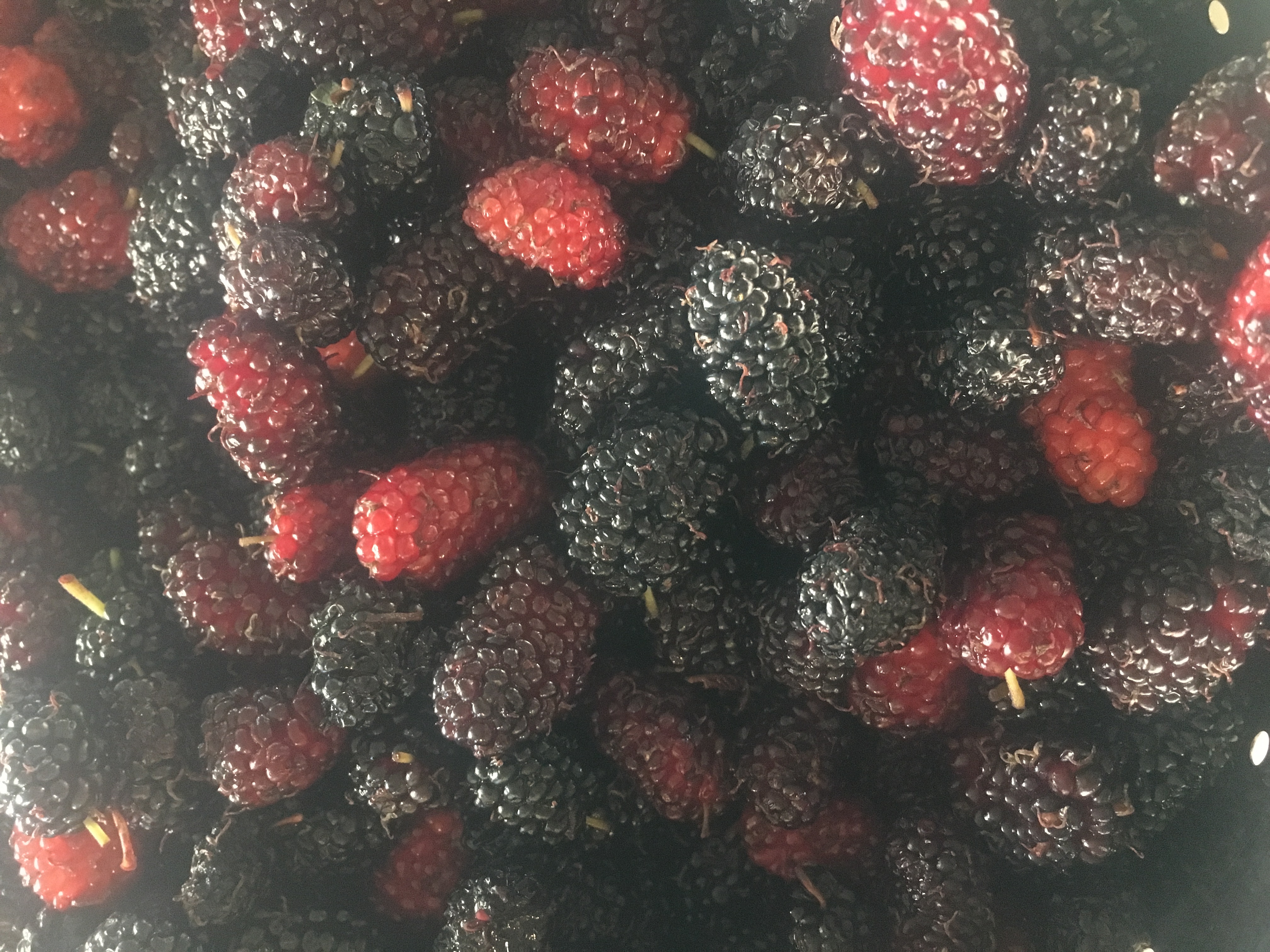
Fresh picked mulberries
Freshly picked mulberries


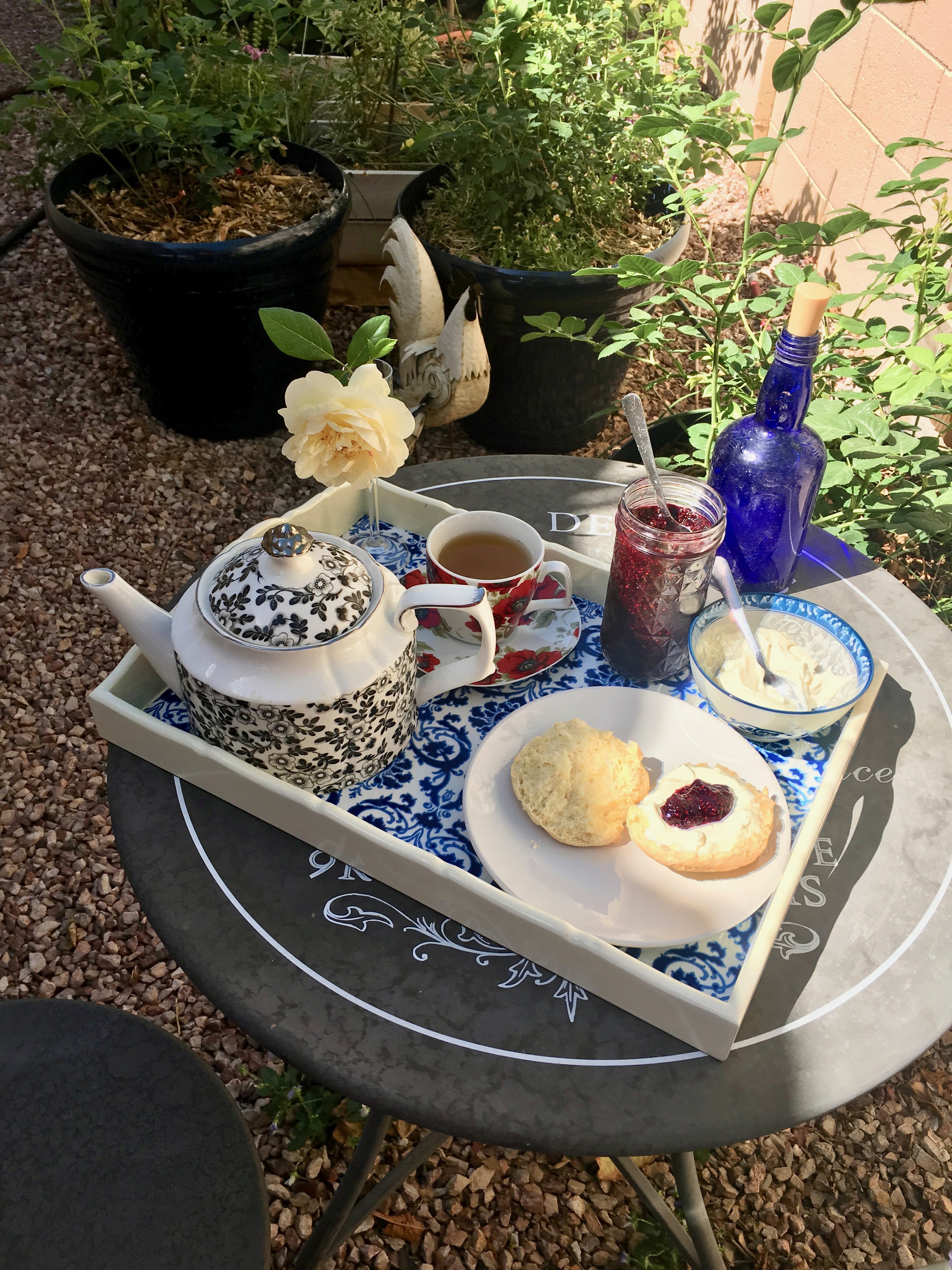
I spent an enjoyable afternoon with her and loaded up on mulberries, which I planned to turn into jam. This post will be short and sweet, because as I write it, the delicious scones with mulberry chia jam and fresh cream, along with a pot of mint tea is being enjoyed on a beautiful Spring afternoon.

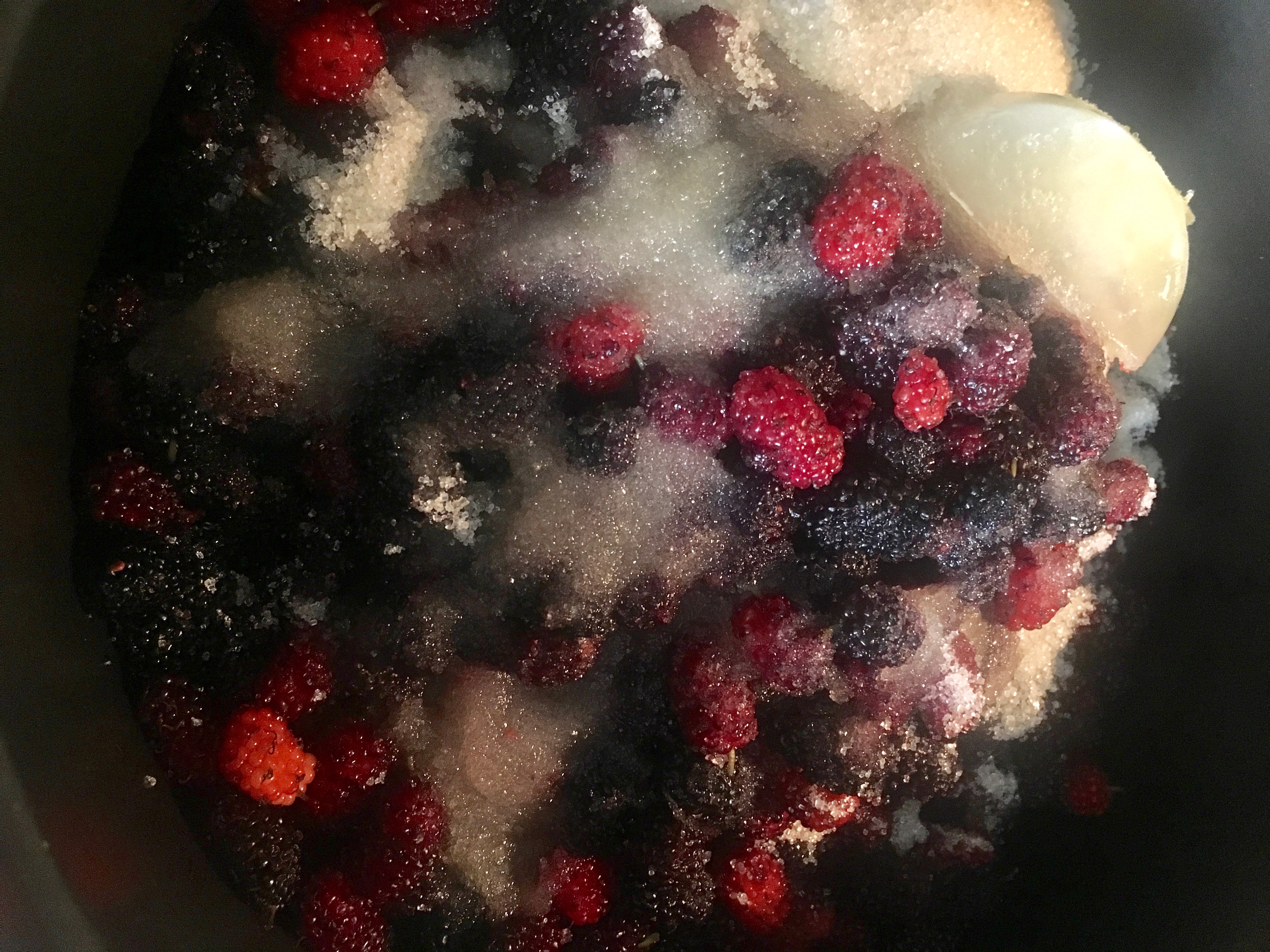
I chose to do a mulberry chia jam because I wanted something with less sugar and mulberries have such a high sugar content anyway. However I still wanted a good thick texture. It is seedy, and the fruit is mostly whole, but I prefer a jam rather than jelly, so I don’t mind this at all. The chia seeds also add protein making it more nutritious. Since it is not overly sweet, the mulberry flavor really shines through, however, feel free to add more sugar if you prefer something sweeter. It was really simple to make. The lemon adds a lovely brightness and enhances the berries. I put the berries, sugar, and lemon juice into my trusty cocotte and jam was in the making.

Before I continue, I feel like I must rave about my cocotte. It was a Christmas gift from a dear friend and I use it just about every day! Stews, beans, baking bread, jam making- it does it all!  I have a fondness for French cookware and I am happy to have this addition.

Jam ingredients in the cocotte
In the cocotte

On to the recipe!

Mulberry Chia Jam

Ingredients

6 cups fresh mulberries
1 cup sugar
1 ice cube lemon juice/2 tablespoons
1/4 cup water
4 tablespoons chia seed

Method

Add all ingredients to the cocotte, except for the chia seeds. Cover and bring to a hard simmer. Reduce the heat to low and watch that it does not bubble over, you may need to leave the lid slightly ajar. Cook for 2 hours or until it is reduced by approximately half. Stir occasional and smash some fruit against the sides of the cocotte. Turn the burner off and stir in the chia seed. Cool slightly. If jam seems too runny, add an additional teaspoon of chia seeds.  Fill into sterilized glass jars. Give a quick water bath before completely cooling.

Mulberry Chia Jam with scones and tea
Teatime: Mulberry Chia Jam and Scones

This jam is delicious in a variety of uses. Add some to plain yogurt and nuts for a snack, or add a dollop to oatmeal. Swirl into cream cheese for bagels or thin and drizzle on vanilla ice cream. Use in jam tartlets or as a topping for scones, pancakes, and waffles.

Category: How to Use It

Creamy Stinging Nettle Dip

May 12, 2019 //  by jessica.m.ricco@gmail.com//  2 Comments

I am extremely passionate about stinging nettles. It was foreign to me initially, it was not something we ate in South Africa. However, I did read about them in a storybook I had- Fairytales from Hans Christian Anderson. The story was called the Wild Swans, and it was about eleven princes and a princess, who was despised by their new stepmother. She turned the princes into wild swans and sent the princess off to live with a poor farm couple. To break the spell on her brothers, the princess was told in a dream, that she should gather the stinging nettles using her bare hands even though they would sting and blister, and then crush them with her bare feet before weaving them into shirts with long sleeves. When the shirts were thrown over the brothers, the spell was broken.

I often wondered about this story as I became familiar with nettles, which I started using because of allergies and migraines. Plants and animals are often tied into folklore, because of certain properties they have. Nettle was once used as a staple fiber to make cloth and yarn. Therefore it would make sense to have nettle be the fiber used in the story. However, nettle is nurturing and healing. The act of making those shirts was one of nurturing and sacrifice. Nettles nutritional content is very high in minerals and protein. Drawing a parallel, could it be, that the nutrition in nettle would build up the bones of the brothers?

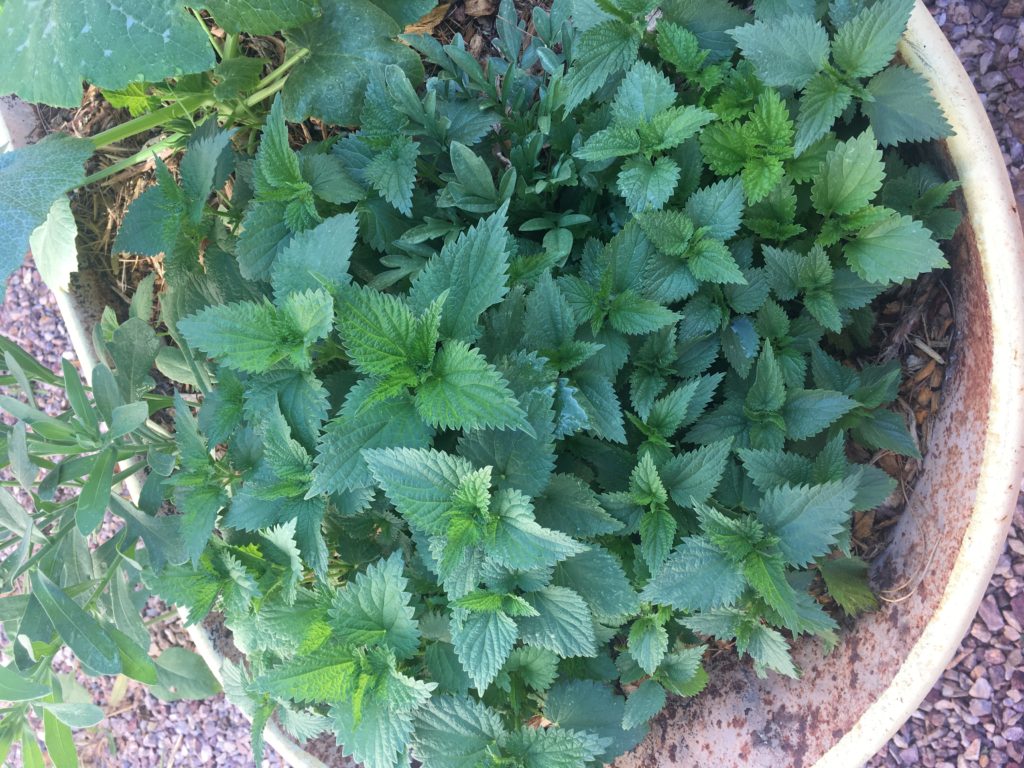
young-stinging-nettles
Young Stinging Nettles

Right now it’s time to share this creamy dip that is packed with flavor and nutrition. I am big on recipes where one can easily improvise. If you are not growing nettles as yet, use spinach, Swiss chard, arugula or any other green leafy vegetable you have on hand. I love using mixed nuts and seeds in this dip. I used almonds, walnuts, cashews, pumpkin seeds, and sunflower seeds in no particular ratio. Use what you have on hand, even if it is just one of type of nut. Using different ingredients will mean a different flavor, but it will still be delicious.

Ingredients

4-5 hands full of freshly picked and washed nettles
1/2 cup mixed nuts and seeds
1/3 cup creme fraiche/greek yogurt/plain yogurt
3 tablespoons lemon juice
1-3 cloves of garlic (depending on preference)
1/2 teaspoon salt
Black pepper to taste
1/2 cup water

Method

Put the water in a small saucepan and bring up to a boil. Add in the nettle, and cover with a lid. Steam for 3 minutes, which breaks down the cell walls and makes the minerals in the nettles more available. Do this for any green you choose to use. Add all the ingredients to a blender. Do not strain the nettles, any moisture remaining in the pan should be added too. Blend until smooth and creamy. A small amount of water can be added if it needs to be thinned further.

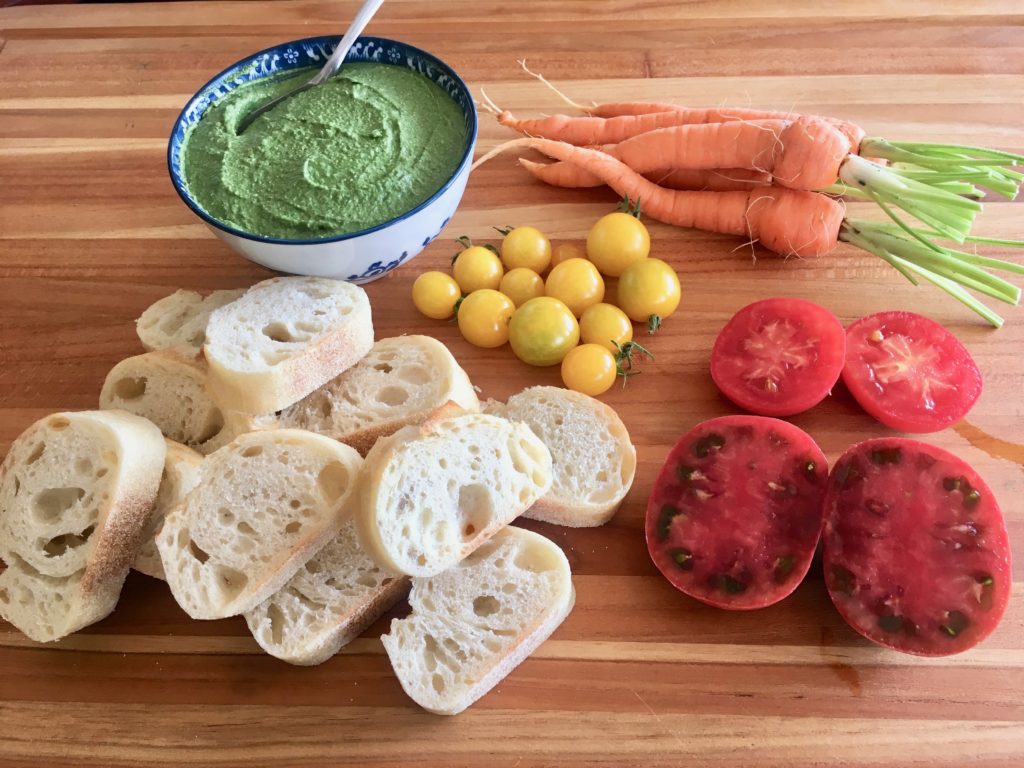
Creamy Nettle Dip & Homegrown Vegetables

Category: How to Use It

Copyright © 2026 ss_site_title · All Rights Reserved · Powered by Mai Theme