Welcome to WordPress. This is your first post. Edit or delete it, then start writing!
Garden of the Month: August
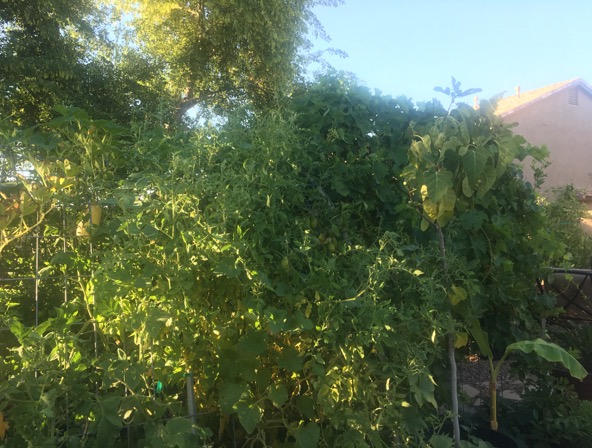
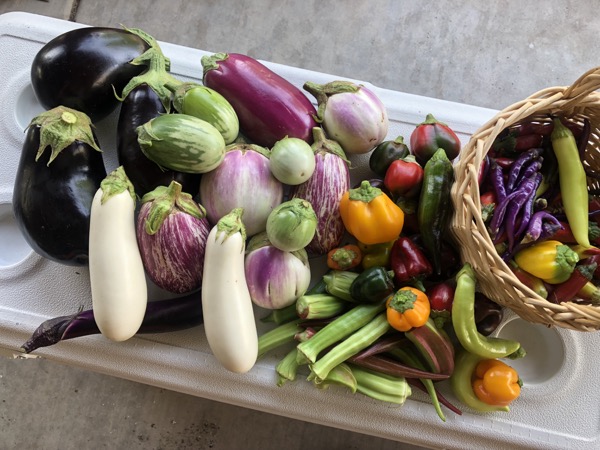
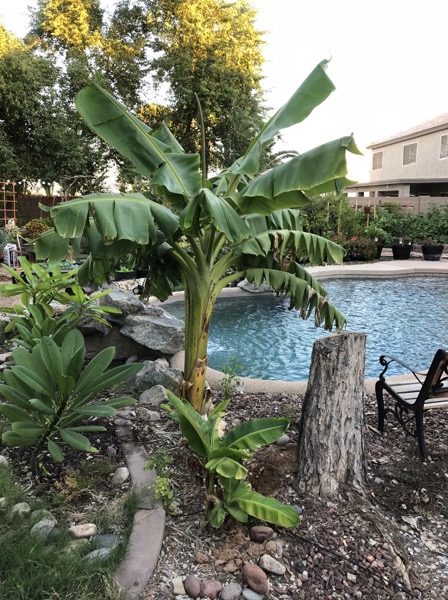
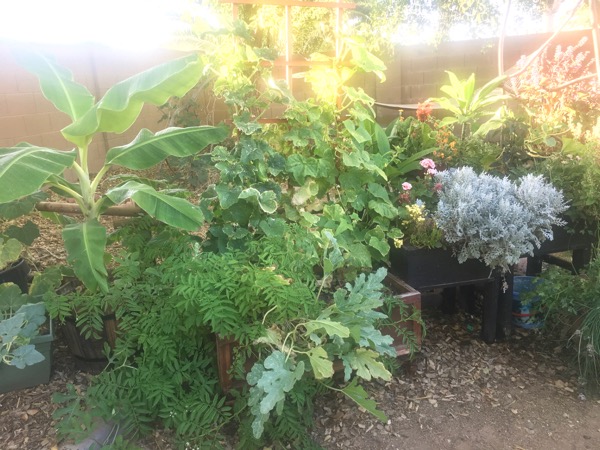
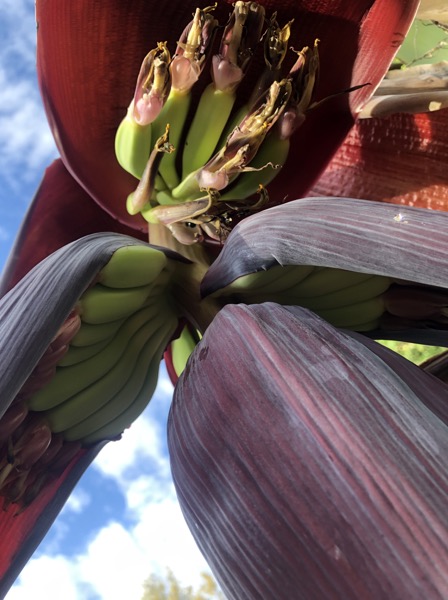
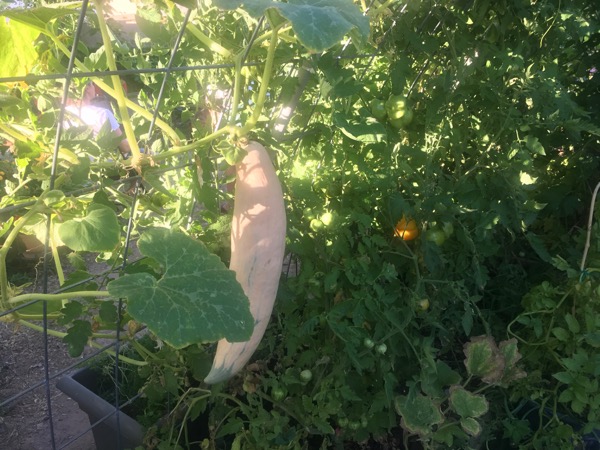
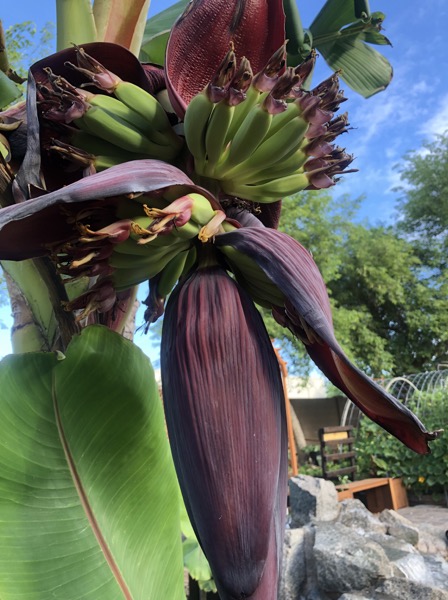
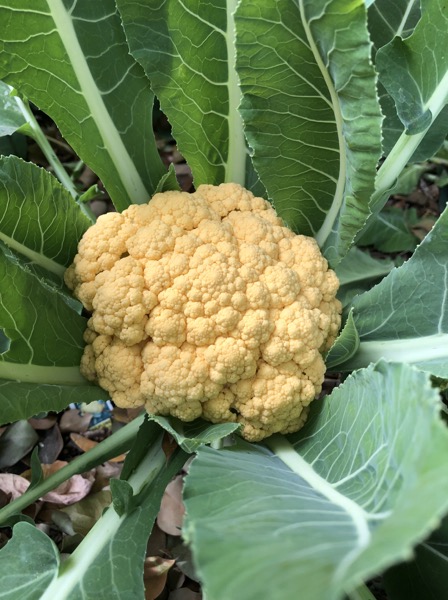
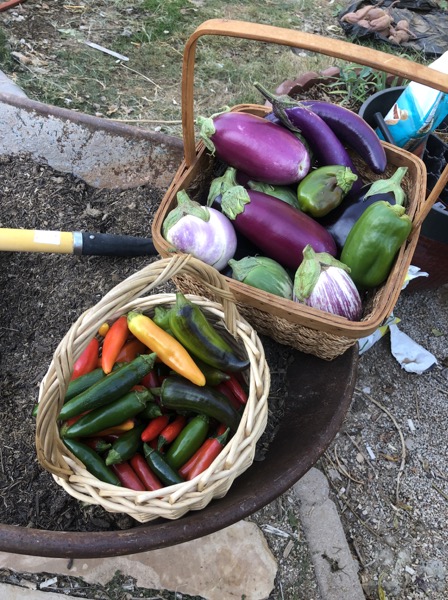
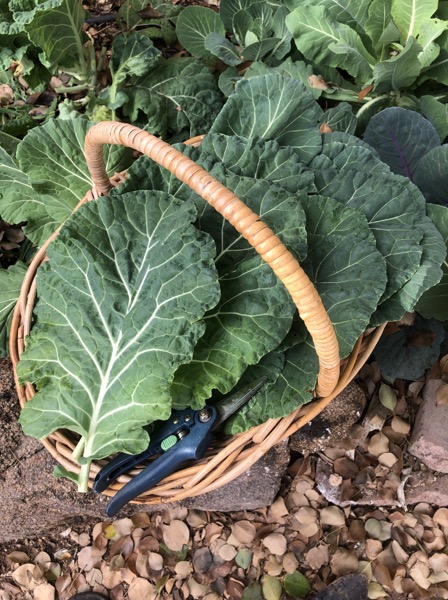
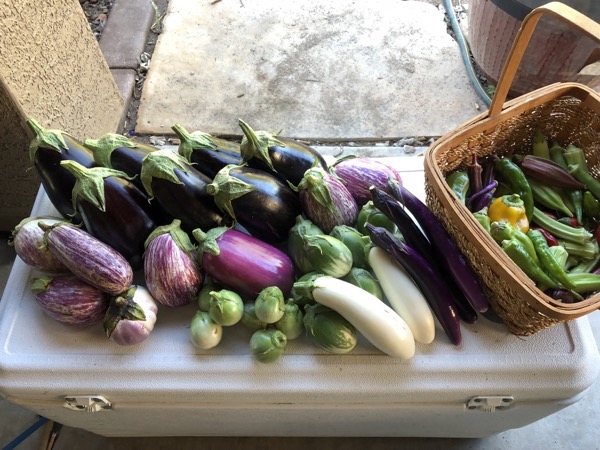
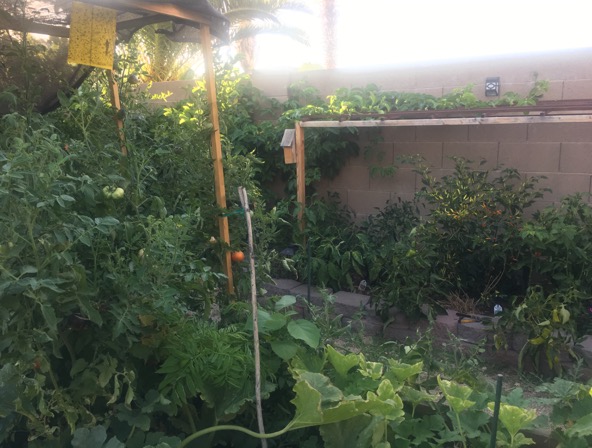
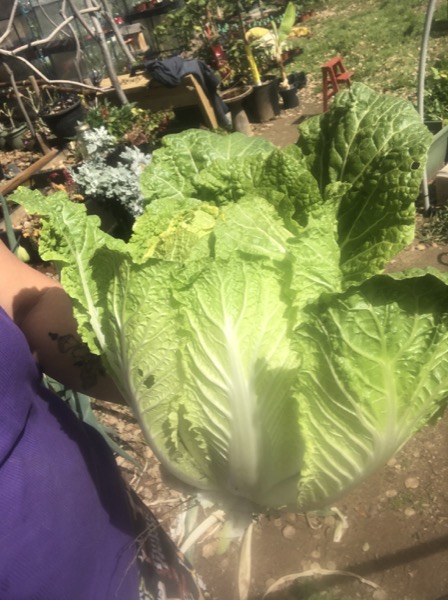
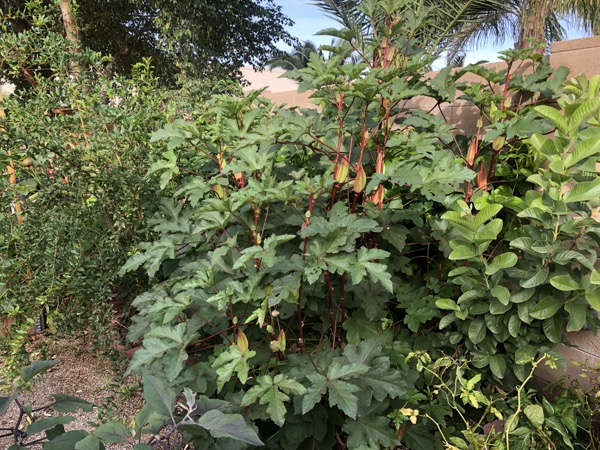
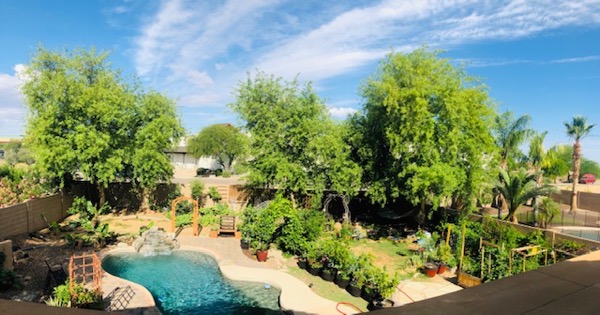
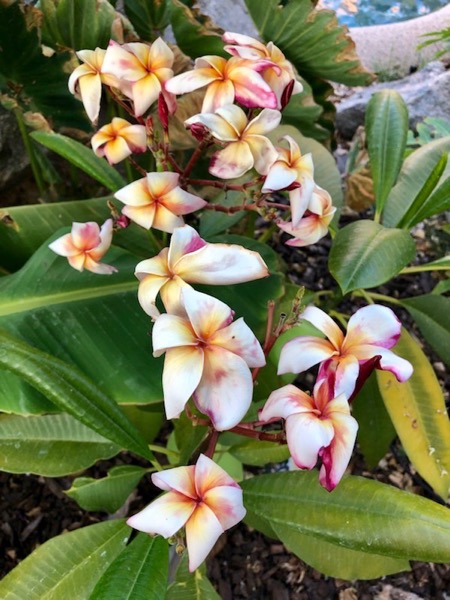
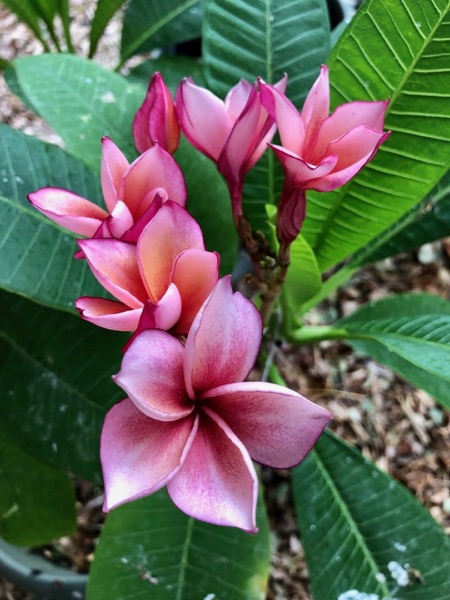
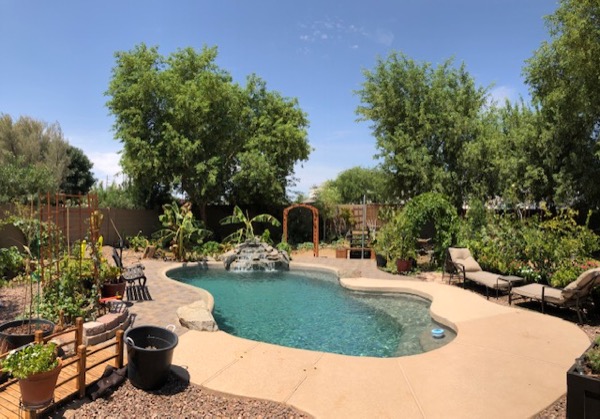
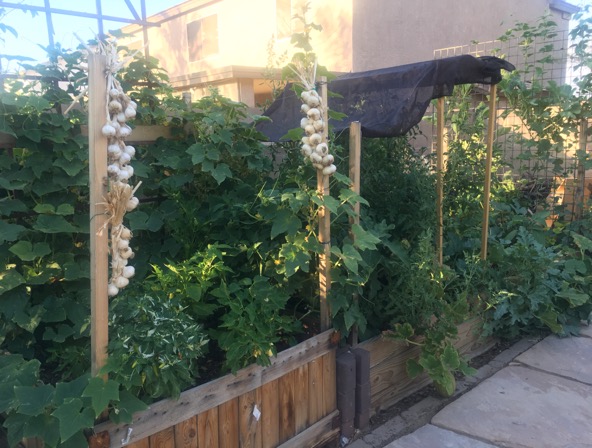
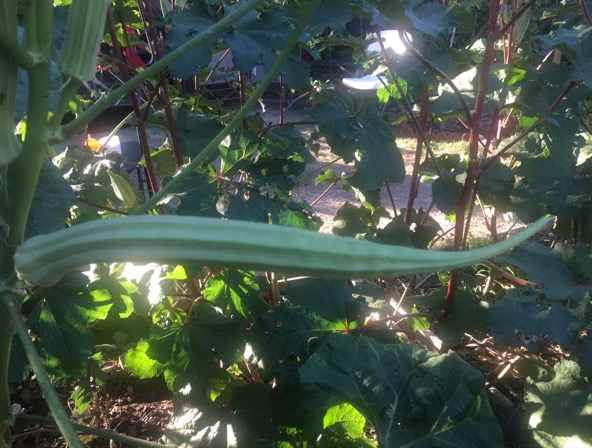
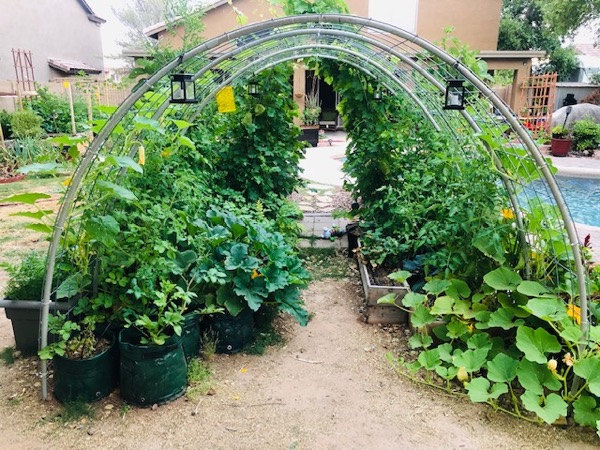
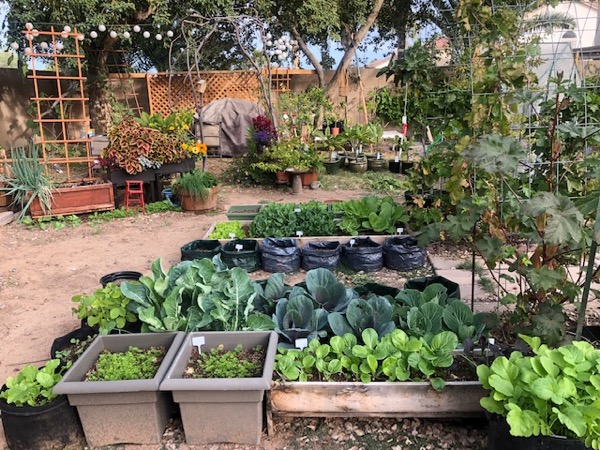
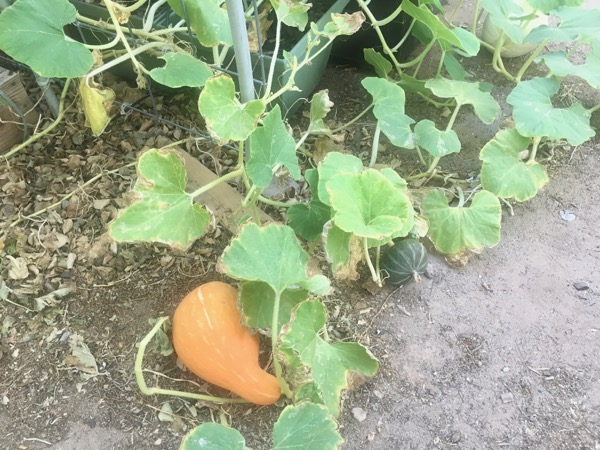
Walking into Sandra Love’s garden is a jaw drop moment. She lives in an HOA monitored neighborhood and her front yard is quite unassuming. You walk down a little side yard and suddenly it all opens up. It is clear she is trying to create a tropical paradise. I was immediately drawn to the side of her yard with her raised veggie beds. They are lush with huge tomato plants, peppers, melons, squashes, herbs, and more. The okras are gigantic. Passion fruit vine covers a wall and provides some shade to eggplants and chilies. A trellis arch is covered with grapes, squashes, and melons. The vines are heavy with fruit. Strawberries grow happily in the shade of this vine covered arch. There is a variety of fruit trees, mostly tropical. An apple tree is covered in ripening apples. Citrus dot the property and there are also pomegranate and mulberry trees. Guava, jujube, bananas, calmondin, mangoes, and Vietnamese Cherimoya are strategically placed around the property in the best areas conducive to their growth. Some provide shade for younger trees and veggies, others need the shade of the larger trees. Sandra’s non-food passion is growing Plumeria. The other side of her yard houses many, many varieties of plumeria, and she keeps adding to this collection.
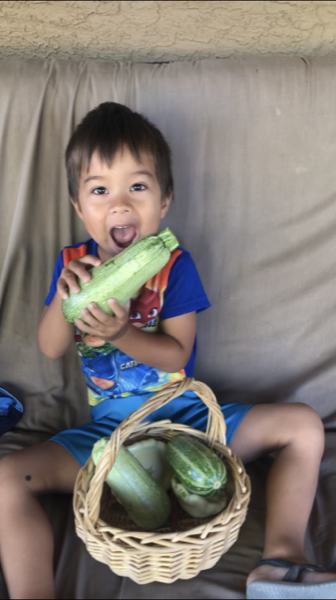
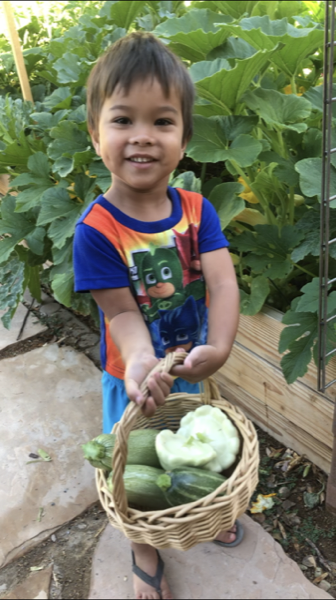
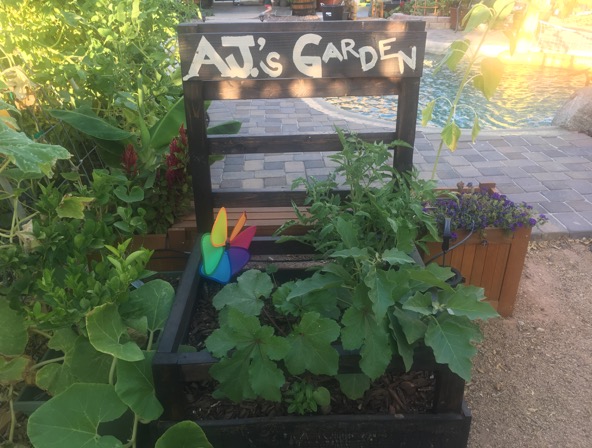
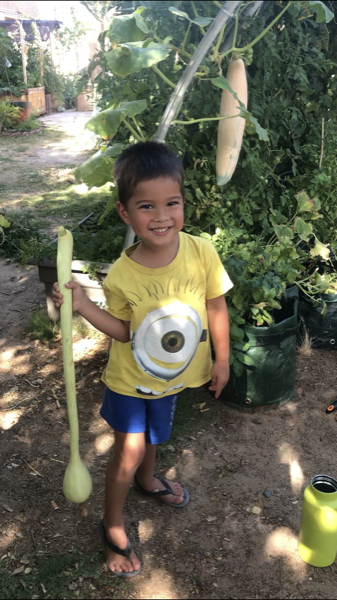
Sandra does have a mini garden helper. He recently got his own little planting box and he relishes harvesting food every day with Sandra. He enjoys snacking on peas, carrots, tomatoes. and fruit that he picks as he wants. He is a proud little gardener and eager to give visitors a tour of the garden.
What is gardening to you?
Gardening to me is many things. It’s being able to provide my family with fresh food grown with hard work and love, on top of the ability to control what it is that goes into our produce (therefore our bodies). Gardening is tranquility, where I go to relax and feel peacefulness, where I can feel in harmony with Mother Earth. I’m extremely fascinated with biology and all things life, and gardening allows me to surround myself with exactly that.
How did your garden adventure begin?
When I was growing up both my parents gardened. Later when I was raising my kids it was fun to garden with them, to pull up radishes from the garden for example. I do garden more now since they are grown.
What changes have you made that have been really impactful?
Compost. Being as I’m from California, gardening was quite easy for me. Anything grew, we didn’t have to give all the extra care as we do here in Arizona. In recent years since moving here, I’ve added compost and compost tea to my fertilizing schedule and it has helped me combat a lot of problems I see others having here due to our very difficult climate.
What do you enjoy growing?
Whatever grows. If it feeds me, even better. I’m especially big on vegetable growing. I cook a lot, so anything that helps me in the kitchen, it’s in the garden. Since buying a home with a fairly large lot, I’ve been adding more and more variety to the garden. What started out as mainly tomatoes, peppers, eggplants and okra in very few varieties, has expanded to a plethora of different varieties of those along with my ability and space now to grow summer and winter squash, cucumbers, melons and fruit trees. I also enjoy growing things that others don’t have. Different varieties, rare fruit, something not commonly seen in your regular landscape, I’m all for it.
What do you want other gardeners to know about your garden?
You can do it too. I’m often told by others how amazing my garden is, yet I feel no more special than anyone else with a hobby. People receive from things what they put into it. I don’t believe it’s a hard hobby. Challenging yes, but with any challenge comes the need to put forth an effort to learn. I just love to learn. You can’t be good at something if you already know it all and are unwilling to learn from others or put in a little footwork. If you want to learn to garden, you WILL be able to garden.
What are your biggest gardening challenges?
Most in Arizona would say the sun and its relentless need to try to kill us in the summer. But I say the winter cold snaps. Aside from vegetables, tropical fruit is another one of my needs in the garden. Being from the tropics, I miss the landscape. Being surrounded by banana trees, guavas, cherimoyas… I’m also a big Plumeria collector and our cold climate is just not friendly to this hobby. That’s what I’m trying to replicate in a portion of my yard is a tropical climate, and it has definitely been one of the biggest challenges.
What are your biggest successes?
Going by what others have told me and what I see others having difficulty with, I would have to say bananas. I see so many people having issues with growing bananas and mine are just shooting up and popping up pups everywhere. If you were to ask me what my secret is, I would have to say the same thing as I say with any other plant in my yard. Location, water and feed your soil.
Any tips to share with others?
Planting location is my #1 tip to any gardener in Arizona. Yes, soil, water, and fertilizer matter, but those are things that can be fixed if done incorrectly. Location can’t. The first thing I looked at when buying our home was the backyard exposure and possible placement of planters, raised beds and trees. My garden was planned in my head before our home was purchased. My bananas thrive because of where I put them, but 10 feet over, they would suffer. My garden beds also thrive because of where I placed them. Placement matters very much in the desert. Heat intolerant plants must go to the east of a structure such as your home, wall or tree to keep them healthy throughout our brutal summers. For those who don’t have this option, shade cloth is a must. This is the starting basis of a successful garden. You can change your watering and fertilizing schedule, you can amend your soil… but if you put your avocado tree dead center in the middle of your yard with no sun protection, there is nothing you can do to amend this without having to relocate your tree. The same would apply if you put a garden bed against your south wall and realize your plants do not have any sun in December. So yes, start everything with placement.
Follow SANDRA:
@LovesAZDesertGarden
Shade Trees for the Desert Garden
Every garden deserves at least one tree, no matter how small the space. Trees anchor a space, adding dimension and structure. They provide habitat, shade, clean air, ambiance, and more.
There are a few things to keep in mind when choosing a tree for your space. Consider the growth habit of the tree: is it a tall and narrow structure or does it have an open structure that branches out? How big will the tree be at maturity, and will it affect surrounding structures? What kind of care will it need?
It is also important to make sure trees will not affect in-ground utility lines or septics systems, as well as overhead power lines. Tree root systems will grow 1.5-4 times as wide as the canopy of the tree. This is important to know for placement near buildings and walls. Research any tree you are considering planting.
The list we have compiled is a mix of fruiting, flowering, and ornamental trees that grow well here in the low desert. A main benefit of planting any of these trees would be the shade provided.
There may be future additions to this list that we may have forgotten to mention at the time of writing this post. We have noted next to each tree if it is suitable for smaller or larger space
Apple – Malus domestica
Small, medium, large spaces. Edible, deciduous
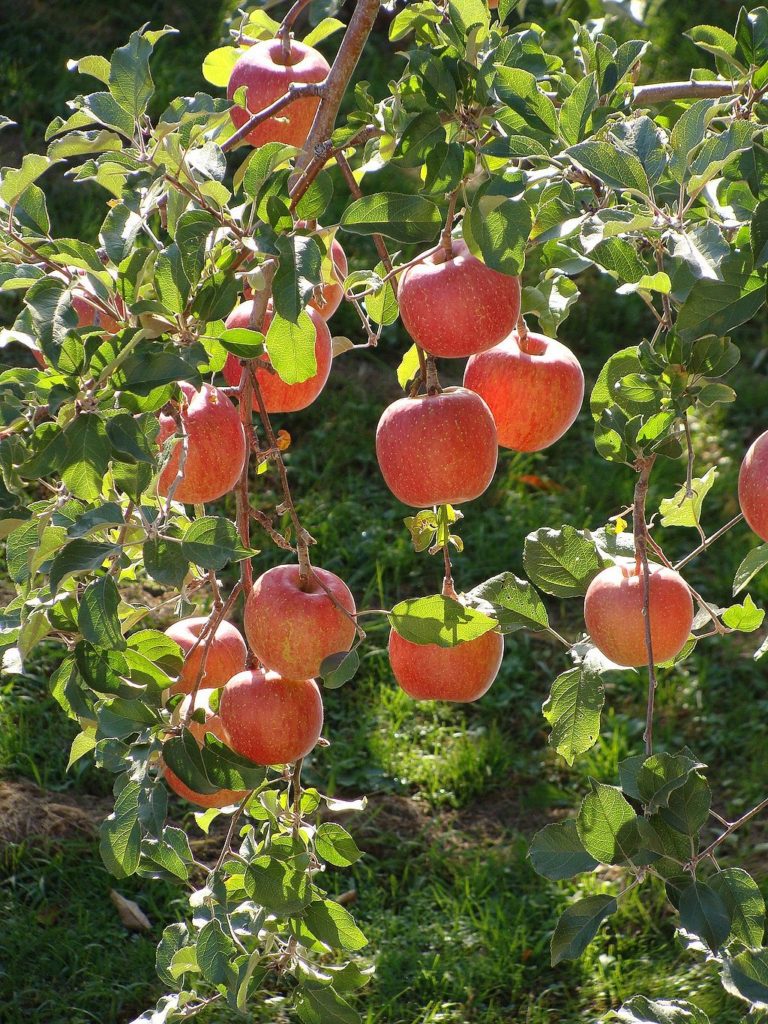
An apple tree is an aesthetically appealing addition to any garden. They have a lovely structure and will provide a nice dappled shade in a smaller space. Spring transforms apple trees into a mass of pale pink and white blossoms that attract a multitude of pollinators. In addition, they will also provide a food crop. Unlike peaches, apples are not as affected by lower chill hours and most varieties grow well here in the Phoenix area. Varieties that are well-known to do particularly well in our desert climate are Anna, Golden Dorset, Ein Sheimer, Fuji, Beverly Hills, and Gala. Consider harvesting times for the varieties that are of interest. It is important to choose a variety that is self-pollinating if there is only space for one tree. However, having one tree does not necessarily mean a gardener is limited. Multiple varieties can be grafted onto a single tree. Note, in-ground apple trees can reach a height of 50 feet. Apple trees also grow well in containers. Prune to maintain desired size or purchase of dwarf rootstocks.
Image credit: Aomorikuma [CC BY-SA 3.0]
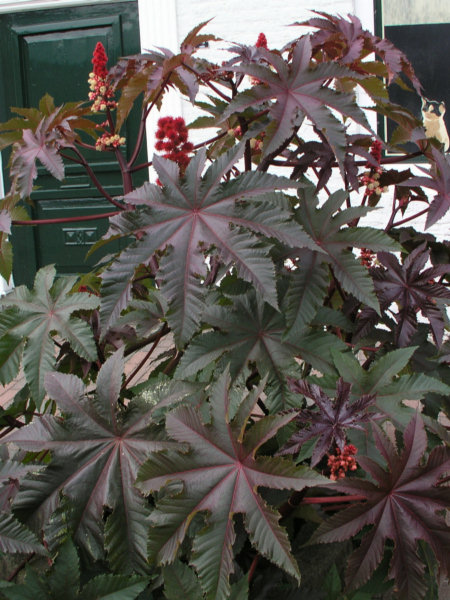
Castor Bean – Ricinus communis
Small, medium large spaces. Perennial flowering bush
The Castor bean is polarizing among desert gardeners. Some love that it is a very fast growing perennial that can reach 10-feet from seed in a single summer. It will die back in the winter if not protected. In addition, the plant and especially seeds, while lovely in appearance, are poisonous. They are easy to remove though, to protect children and pets.
Image credit: Evanherk [CC BY-SA 3.0]
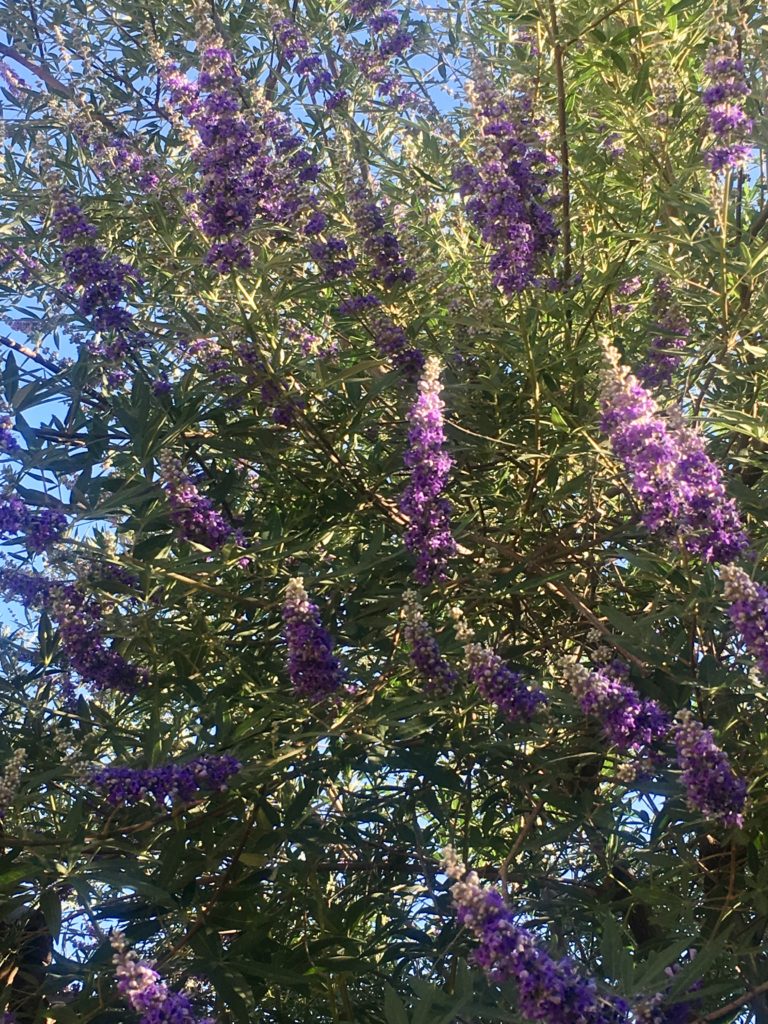
Chaste Tree – Vitex agnus-castus
Small, medium, large spaces. Medicinal, Ornamental, Deciduous
Also known as Vitex, the Chaste tree is a very drought tolerant large shrub that can also be grown as a small tree. It is a fast grower with very attractive foliage that has a pleasant clean scent. It grows 10-20 feet tall and has a wide spreading habit. It produces a mass of purple blooms in late spring and is a magnet for pollinators. Chaste trees have a smaller re-blooming period in September and are available with purple or white flowers. Pruning helps to maintain a smaller size in small yards or pots.
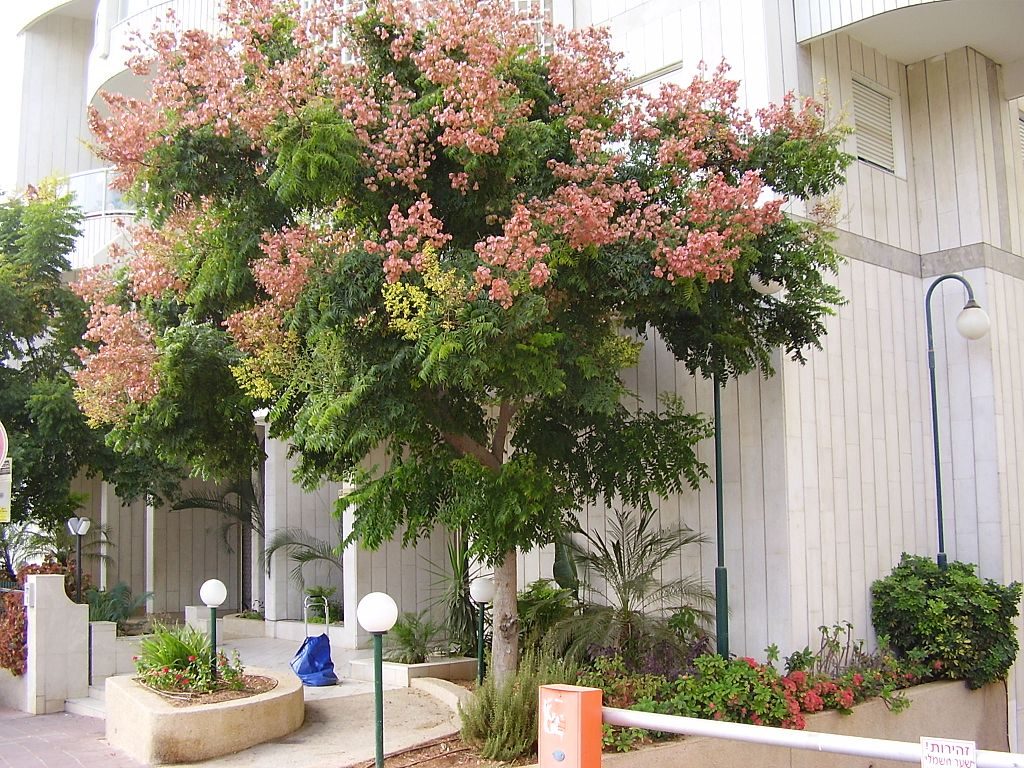
Chinese Flame Tree – Koelreuteria bipinnata
Large spaces. Ornamental, deciduous
This interesting tree grows to 20-50ft tall but needs to be actively pruned when young to encourage an appealing shape. It grows well on flood irrigation and is tolerant of nutritionally poor clay soil. The Chinese flame tree boasts lovely lantern-like flowers and seed pods reminiscent of bougainvillea flowers.
Image Credit: avishai teiche [CC BY-SA 3.0]
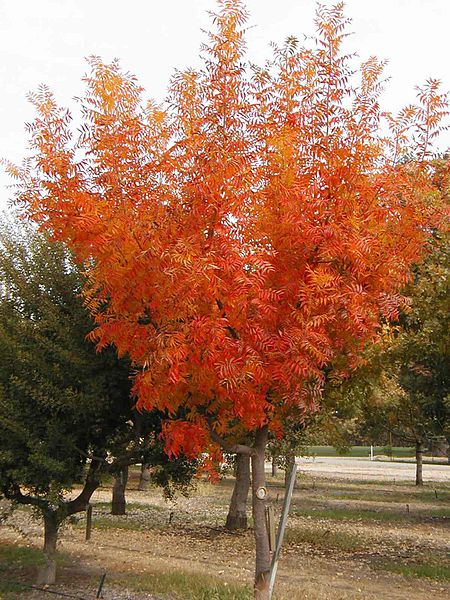
Chinese Pistache – Pistacia chinensis
Medium, large spaces. Ornamental, deciduous
Probably the best feature of the Chinese pistache is its changing fall foliage – something we miss here in the low desert. This is a stunning tree with beautiful foliage irrespective of the time of year. It is very drought and heat tolerant, and also pest resistant. There are several cultivars and hybrids with some differences. Sarah’s radiance gives consistent red fall color. Red Push Pistache has a distinctive red new foliage growth. The Chinese Pistache averages 25-40 feet tall and the crown is 25-35 feet wide.
Image Credit: Ayacop [CC BY-SA 3.0]
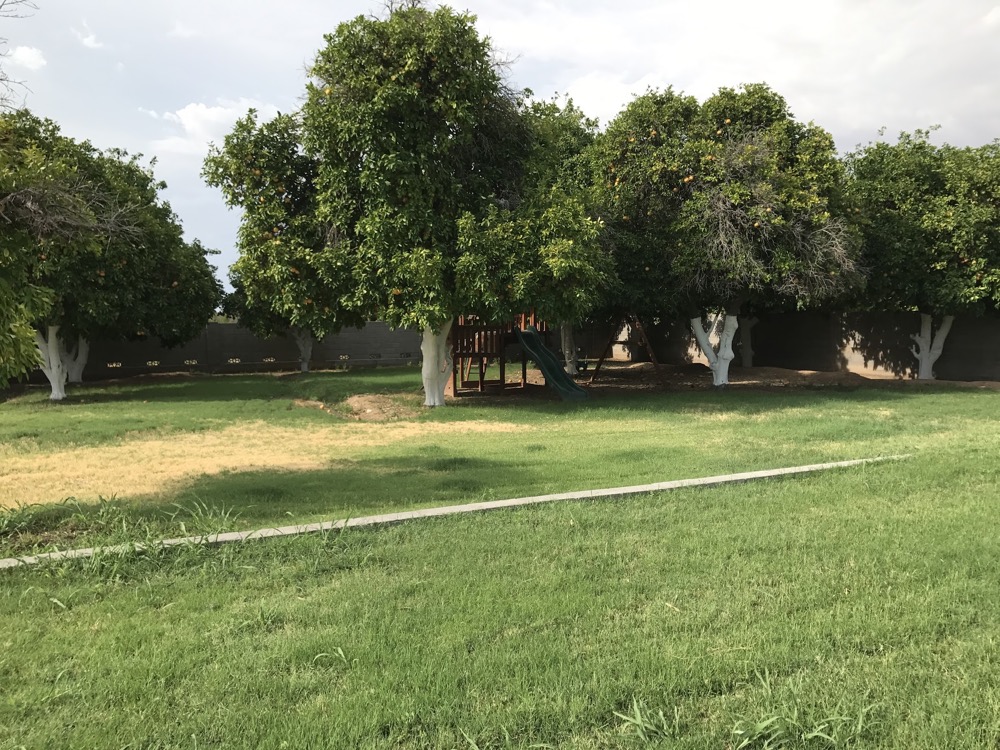
Citrus – Citrus
Small, medium large spaces (variety depending). Edible, evergreen
Mature citrus trees can range 20-25 feet tall and 20 feet wide. Size can be maintained with pruning. Dwarf varieties will grow 10-12 feet tall and 16-18 feet wide. We recommend getting citrus on the correct rootstock for our desert soils. If planting in-ground, purchase trees that are specifically on Seville Sour Orange rootstock, or Carrizo for healthy trees. If potted, a wider range of rootstocks is acceptable because you can better control for drainage and soil quality. For small spaces, Flying Dragon is a dwarf rootstock that works well, with some specific care. Kumquat, lemon, and tangerines make excellent potted trees. For in-ground planting, any citrus of choice will work. Other varieties can also be grafted onto a single tree. Keep in mind, some citrus varieties are more cold or heat tolerant than others. Lemons and limes are the least cold hardy and limes are also more sensitive to the extreme summer temperatures, requiring some shade. Therefore, limes may not be the best option for a shade tree. Mandarins and tangerines are the most cold-tolerant.
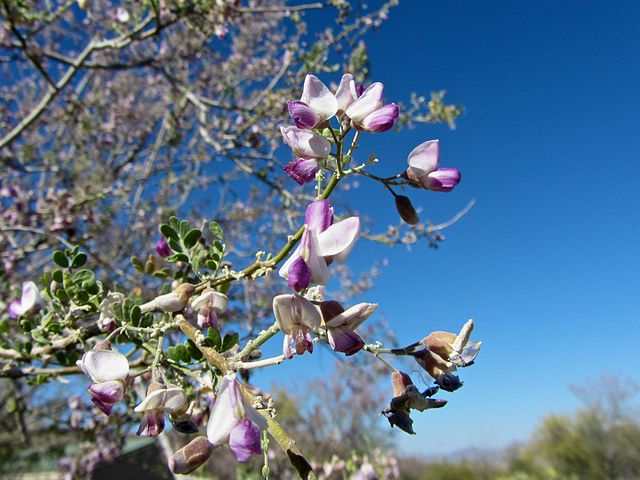
Desert Ironwood – Olneya Tesota
Medium, large spaces. Ornamental, Edible, Evergreen
Ironwood blooms profusely in the spring providing food and habitat for a variety of wildlife. This is a nitrogen fixing tree with pink blossoms that resemble pea flowers. It is very easy to maintain and extremely drought tolerant yet slower growing. It grows to a height of roughly 30 feet and the canopy spreads about 30 feet wide. This is an important native food crop tree, both the flowers and seed pods are edible. Despite being an evergreen, it will drop leaves in extreme drought, cold or before blooming.
Image Credit: Ken Bosma from Tucson, Arizona, USA [CC BY 2.0]
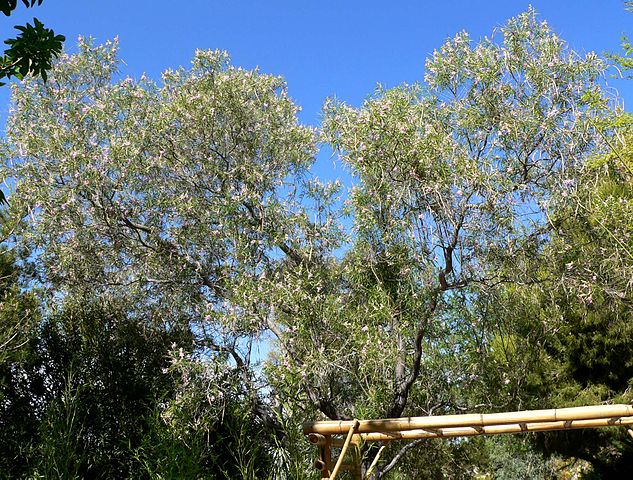
Desert Willow – Chilopsis linearis
Small, medium, large spaces. Ornamental, deciduous
This fast growing deciduous tree is both extremely heat and cold hardy. It is a large, multi-stemmed shrub that can be trimmed as a tree for a smaller space. Desert Willows bloom often providing good color for desert gardens. Bloom colors range from white and pinks to burgundy. Desert Willow will attract hummingbirds, butterflies, and bees.
Image Credit: Stan Shebs [CC BY-SA 3.0]
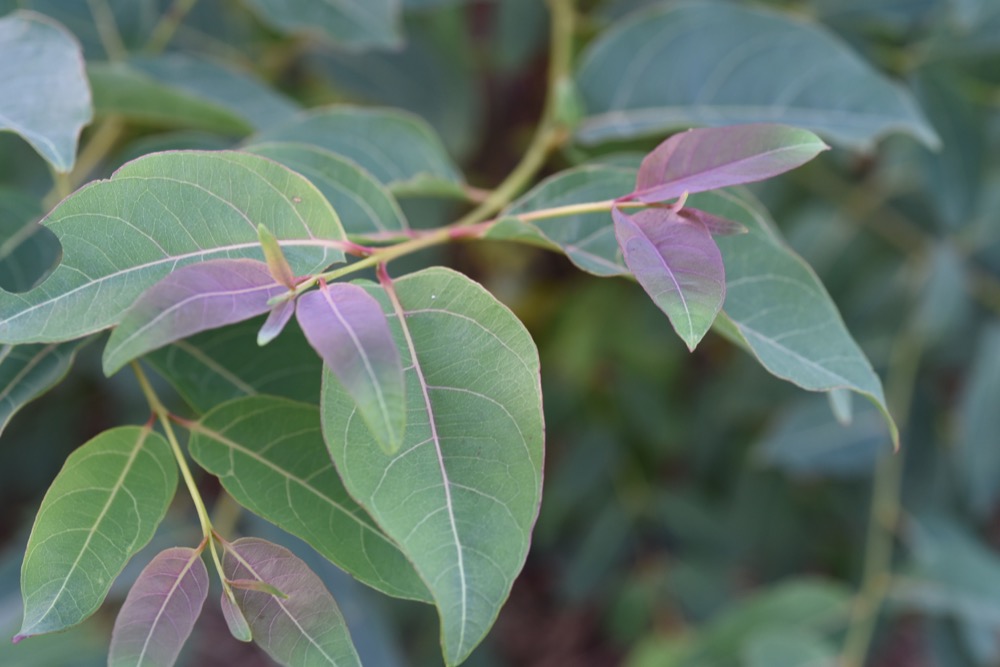
Eucalyptus – (over 100 varieties)
Large spaces. Ornamental, frost deciduous
One of the tallest trees you can grow here, Eucalyptus or gum trees are best left to large properties. Native to Australia, there are over a hundred beautiful, unique varieties including the Rainbow (Eucalyptus deglupta), which has colorful peeling bark. There are several cautions when growing Eucalyptus that may or may not outweigh the benefits. The brittle branches are prone to falling unexpectedly, so do not plant near houses/structures. In addition, the leaves are high in a compound that prevents them from being broken down by fungi, so leaf litter can pile up and remain dry.
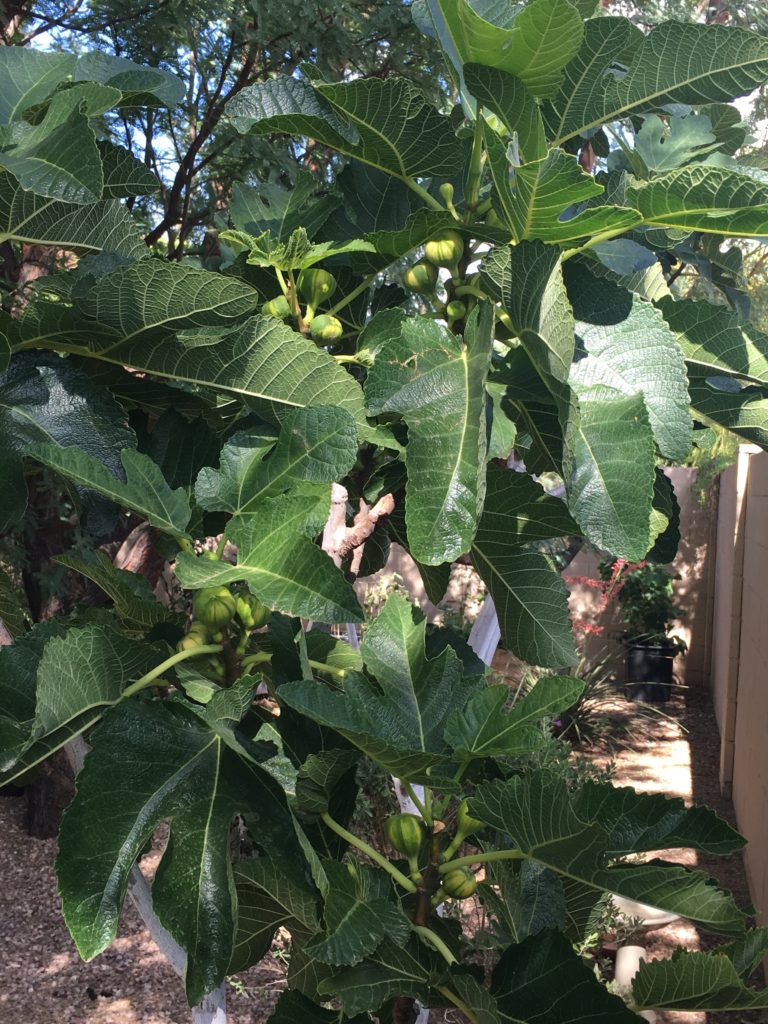
Fig – Ficus carica
Small, medium large spaces (variety depending). Edible, deciduous
A fig tree is perfect for the desert climate. The leaves have a beautiful structural shape, the trees are hardy and handle our heat well, and, of course, they provide an abundance of delicious figs. Figs do well in containers too and therefore, are a good option for a small space. Picking the right variety for a space, however, is important. Some varieties are vigorous growers and best in a large space, such as Black Mission, Black Jack, Kadota, and Brown Turkey. Slower growing less vigorous varieties like Tiger Panache and Violet De Bordeaux are better suited to smaller spaces. As with apples, gardeners are not limited to one variety, as multiples can be grafted onto a single tree. Common backyard varieties are all self-fruitful.
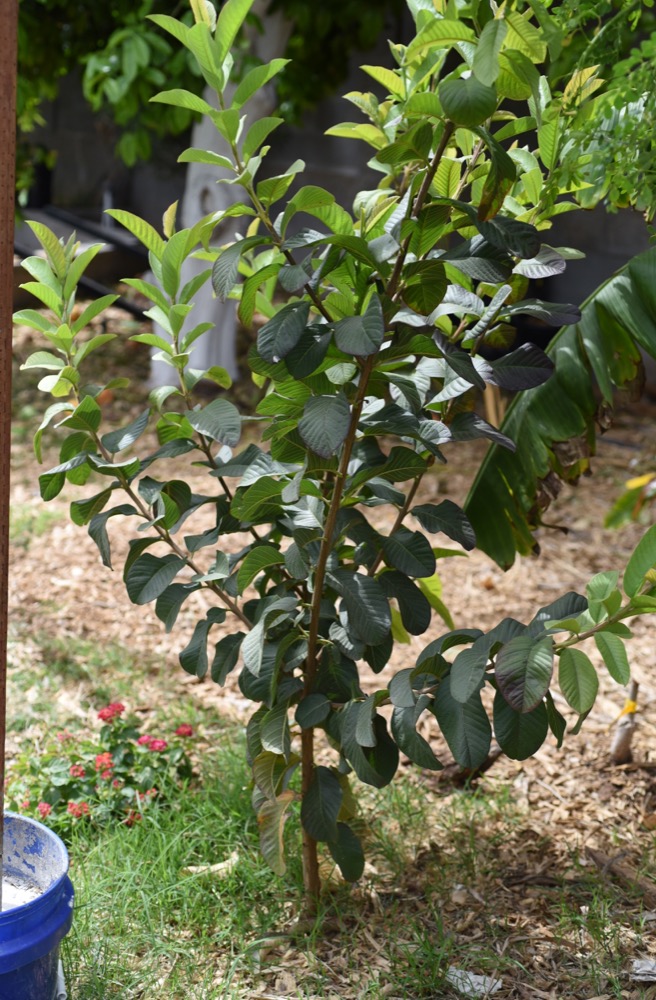
Guava- Psidium guajava
Small, Medium, large. Edible, evergreen but defoilates in temperatures below 35 degrees
Guava is a common fruit tree with desert gardeners, especially among those who enjoy growing tropicals or who are building a food forest. Guava trees are appreciated for their beautiful form and tropical look. The Red Malaysian guava has attractive coppery red leaf growth. Trees can grow to about 20 feet tall, but also tolerate pruning to maintain a smaller size in smaller spaces. There are many varieties to choose from, yet Red Malaysian is often said to be one of the tastiest. Mexican cream, Strawberry guava, and Lemon Cream Tropic Pink are popular varieties to try. They are self-fruitful, do well with deep soaks of water, and are heavy feeders.
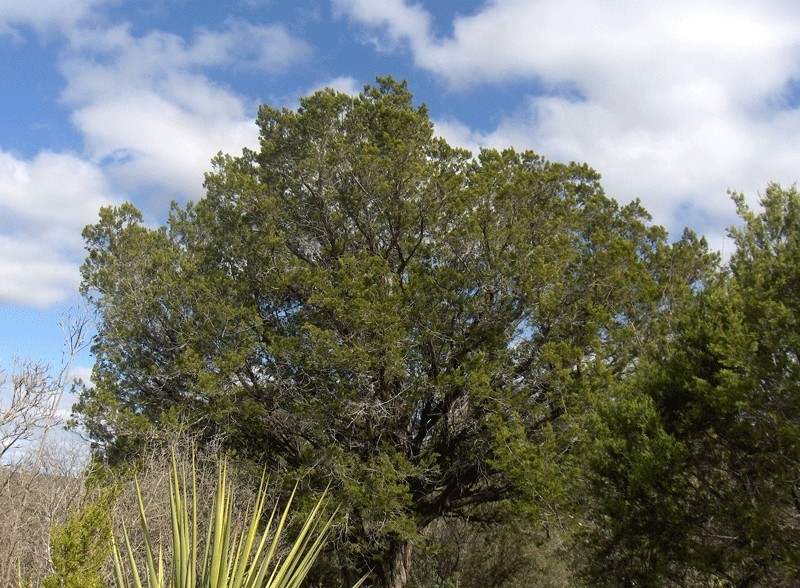
Live Oak – Quercus fusiformis
Large spaces. Evergreen, edible seeds
The Texas Live Oak is an appealing shade tree that is smaller than other oaks and more tolerant to dry conditions. It is somewhat slow growing compared to other options in the list, but does provide acorns, that can be used as a food source.
Image Credit: homeredwardprice [CC BY 2.0]
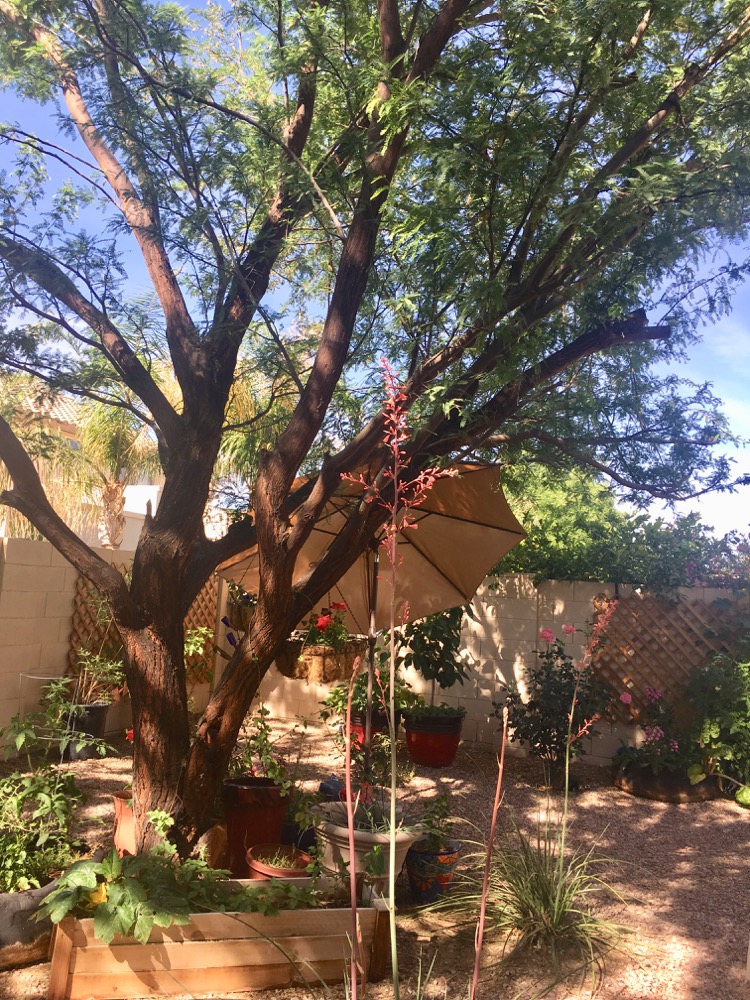
Mesquite – several plants in the genus Prosopis
Large spaces. Evergreen
The Mesquite tree is one of the few native nitrogen fixing plants to the desert southwest. There are several varieties that grow here with varying appearances. Seed pods are edible and, when dried, can be ground into a flour that tastes sweet. However, Mesquite are subject to diseases and uprooting/limb breakage when not planted or watered properly. Trunks also usually have thorns which provide habitat for native wildlife. They have very vigorous roots and should not be planted close to structures.
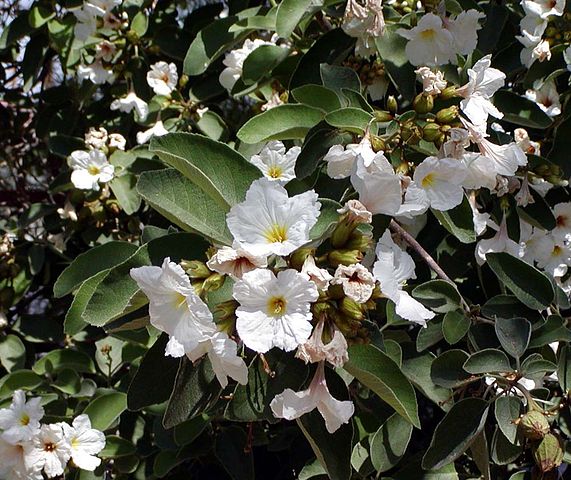
Mexican Olive – Cordia boissieri
Small, medium, large spaces. Ornamental, evergreen but, frost deciduous
This is a lovely ornamental tree that produces showy white flowers from spring into fall, even through our summer. The flowers are fragrant and attract an abundance of wildlife and the foliage is thick and dark green. As the trunk ages, it peels and becomes more ornamental. It is a drought-tolerant shrub that can be trained as a tree and will grow to 20 feet tall. However, it tolerates pruning to maintain a patio size tree. The Mexican olive grows at a moderate rate.
Image Credit: Stan Shebs [CC BY-SA 3.0]
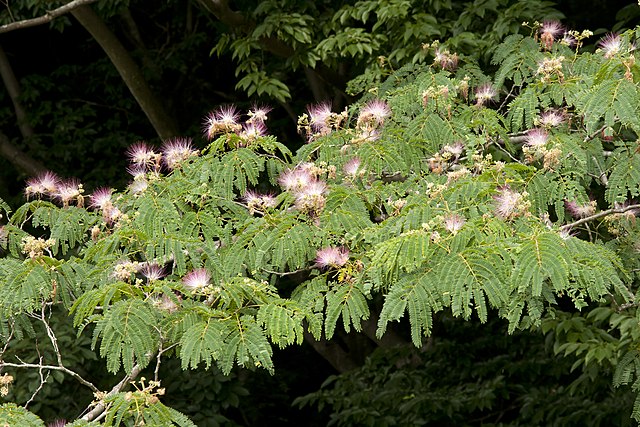
Mimosa – Albizia julibrissin
Medium, large spaces. Medicinal, deciduous
Mimosa is also known as the silk tree due to the stunning hot pink flowers that have a silk thread-like petals. This is a magnet for hummingbirds. The tree grows to a height of 25 feet and is very hardy and drought tolerant. The foliage is fern-like and provides dappled shade. It is fast growing and a nitrogen fixer.
Image Credit: Σ64 [CC BY 3.0]
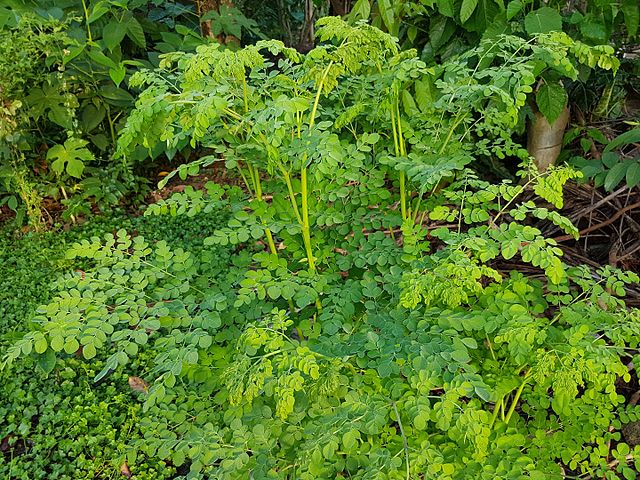
Moringa- Moringa oliefera
Medium, large Edible, evergreen
Moringa is not native to our desert conditions but has proven to be a valuable shade provider. It is a very quick grower and, once established, does not need much water. The leaves, flowers, and green seed pods are edible, and the tree is valued for its health boosting properties and high protein and vitamin content. Moringa is a nitrogen fixing tree. It can be cold and frost sensitive in winter, and can drop its leaves and even freeze back to the ground. However, it normally sends up new growth once temperatures start to warm up. Grow in a large pot in small gardens to control roots. Moringa are easy to grow from seed in a pot or directly in the ground (which does not damage the taproot).
Image Credit: Obsidian Soul [CC0]
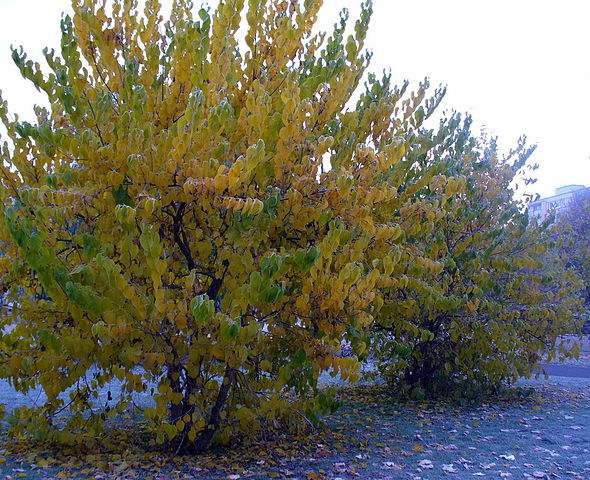
Mulberry – Morus nigra
Small, medium, large spaces. Edible, deciduous
Mulberry trees are fast growers here in the low desert and have very vigorous root systems. Research any variety well before planting. The dwarf ever-bearing is the best option for a small yard and will grow to a height under 10 feet. A variety such as the Pakistani is best grown on a very large property. Other popular varieties are the Shangri La, white mulberries and the weeping mulberry. Different varieties have different flavors: the Pakistani is syrupy sweet, the Shangri la is slightly tart, and the white mulberry flavor is reminiscent of honeydew to some.
Image Credit: Magdalena Šajinovićová [CC BY-SA 3.0]
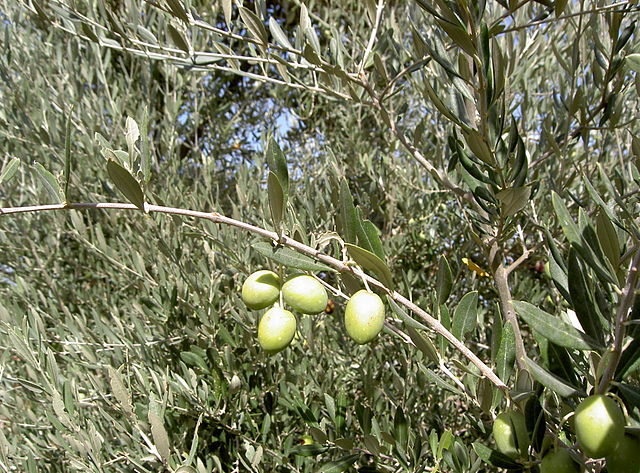
Olive – Olea Europaea
Medium, large spaces. Ornamental, edible, evergreen
Besides the lovely structure of the tree, the attractive silvery foliage also makes this a popular landscaping plant. They grow rapidly and will provide olives to the backyard gardener. Arbequina and Mission are popular varieties to consider. Olive trees can also be maintained in very large pots for the Mediterranean feel. Pay attention to local codes and HOA rules for regulations on fruiting olives, since the pollen is highly allergenic.
Image Credit: Alexander Bergmann
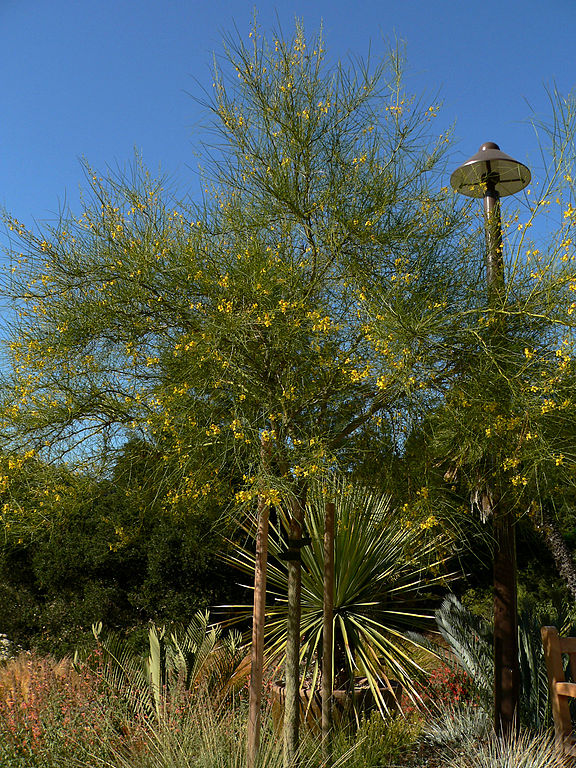
Palo Verde – Parkinsonia aculeata
Large spaces. Ornamental, Edible, drought and cold deciduous
Palo Verde is a desert highlight each spring when it is covered in masses of yellow blossoms. However, it requires deep watering and lots of space. Incorrectly maintained/watered Palo Verde often suffer from significant limb damage or are completely uprooted during monsoon storms. These trees are best grown on flood irrigated properties, where they receive adequate deep watering and can be grown far away from buildings and structures. Palo Verde trees drop leaves during the worst of the heat and dry conditions. During this time, they will provide a very light dappled shade. Palo Verde is a nitrogen fixing tree, and also an important food crop for Native Desert dwellers. The flowers and pods are edible, with some varieties tasting better than others. There are several different varieties of Palo Verde, research before deciding on the best one for your property.
Image Credit: Stan Shebs [CC BY-SA 3.0]
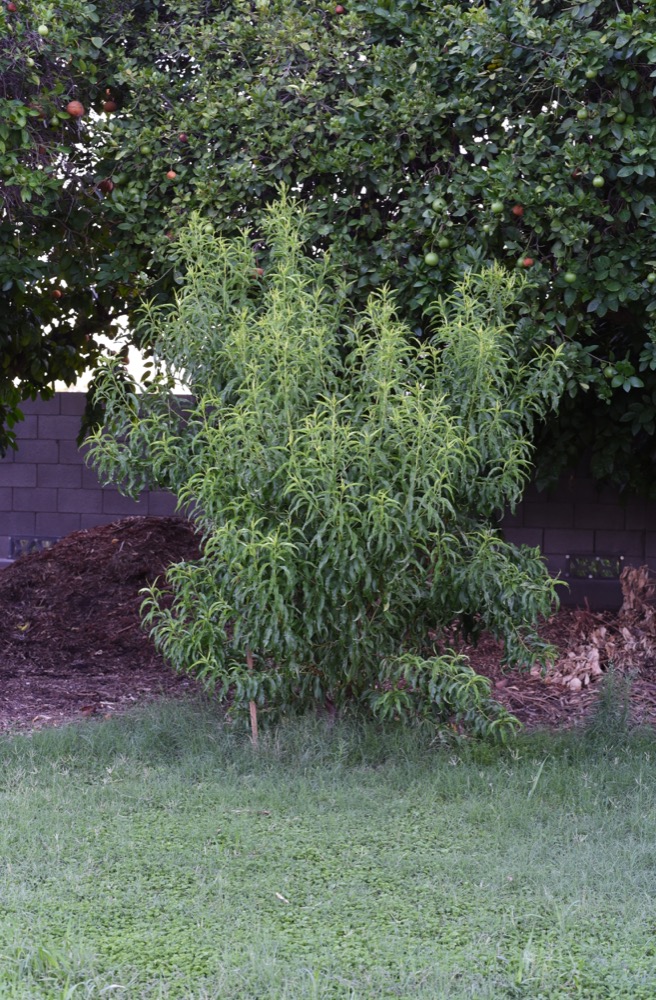
Peach- Prunus persica
Small, Medium, Large spaces. Edible, deciduous
The peach tree is a favorite addition to the desert garden. It is an easy deciduous tree and size is easily controlled by pruning. In addition, there are dwarfing rootstocks. Different varieties will ripen at different times of the year. Pick varieties that are low chill for better production. Desert Gold, Florida Prince, Early grande, and Mid Pride are some popular varieties grown in warmer climates. Protect ripening fruit from the birds with organza bags.
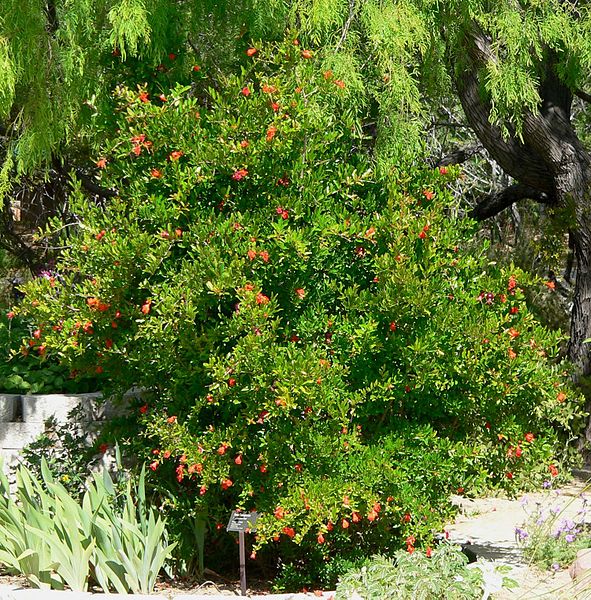
Pomegranate – Punica granatum
Small, medium, large spaces. Edible, deciduous
Pomegranate trees grow very well in the desert and there are several tasty varieties, such as Parfianka, Desertnyi, Eversweet, Wonderful, and Angel Red to name a few. Pruning will help maintain a smaller tree. The bright orange blossoms in spring attract pollinators and hummingbirds. Unfortunately, pomegranate trees can also be plagued by leaf footed bugs. A dormant oil is helpful in winter to help control pests and fruit should be bagged in organza bags to protect them from birds and leaf footed bugs.
Image Credit: Stan Shebs [CC BY-SA 3.0]
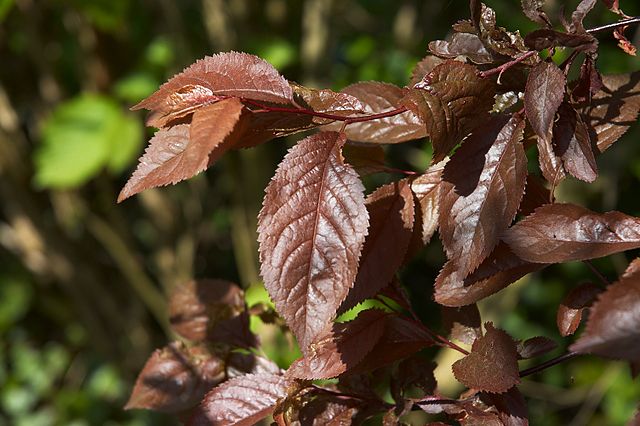
Purple Plum – Prunus cerasifera
Small, medium, large spaces. Ornamental, deciduous
This ornamental plum specimen provides strong color and interest in the garden. It is deciduous adding a good skeletal structure to the winter garden. In spring, it gives way to a profusion of white blooms followed by a rich burgundy leaf that lasts through the summer.
Image Credit: Wouter Hagens [Public domain]
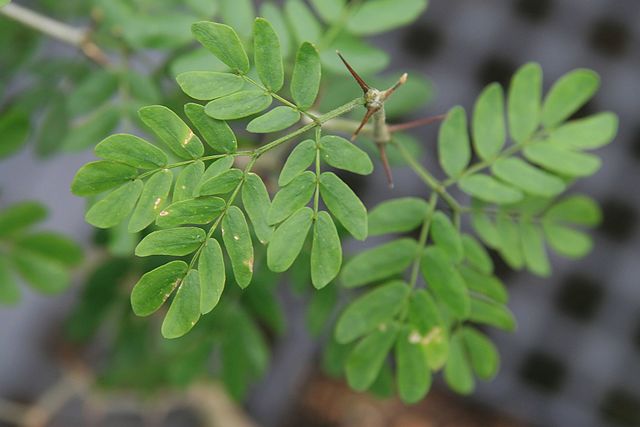
Texas Ebony – Ebenopsis Ebano
Small, medium, large spaces. Edible, ornamental, evergreen with sufficient water
Texas Ebony is a very slow grower that will provide a dense shade. It is however a beautiful tree and works well in a small space due to this slow growth. They reach a height of 25 feet tall with 20 foot wide canopy. It requires little pruning. The Texas Ebony does have thorns, but the white puff ball like blossoms attract bees. Texan Ebony, while a low use water plant, will drop leaves if water is insufficient, and is deciduous if temperatures are below 25F. It is a nitrogen fixing tree that blooms in mid spring and mid fall, and will produce edible seed pods. Seeds are used in jewelry making and can be ground for a coffee substitute. The wood is esteemed for quality woodworking.
Image Credit: Photo by David J. Stang [CC BY-SA 4.0]
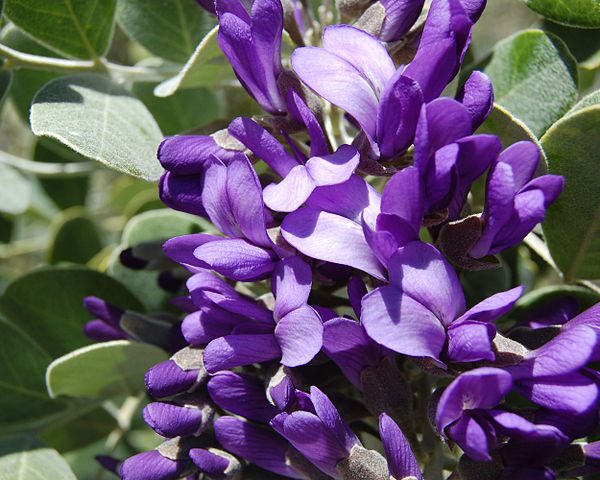
Texas Mountain Laurel – Sophora Secundiflora
Small, medium, large spaces. Ornamental, evergreen
Texas Mountain Laurel is the desert equivalent of lilacs. The deep purple drooping clusters of blooms in early spring are very fragrant. Most liken the fragrance to grape bubblegum. This is a slow growing shrub that provides a deep shade. It will grow to a height of 15-25 feet tall and 5-15 feet wide. It is drought tolerant, requires a small amount of pruning, and is a nitrogen fixer. Please note that the seeds are poisonous.
Image Credit: Kretyen at Flickr [CC BY 2.0]
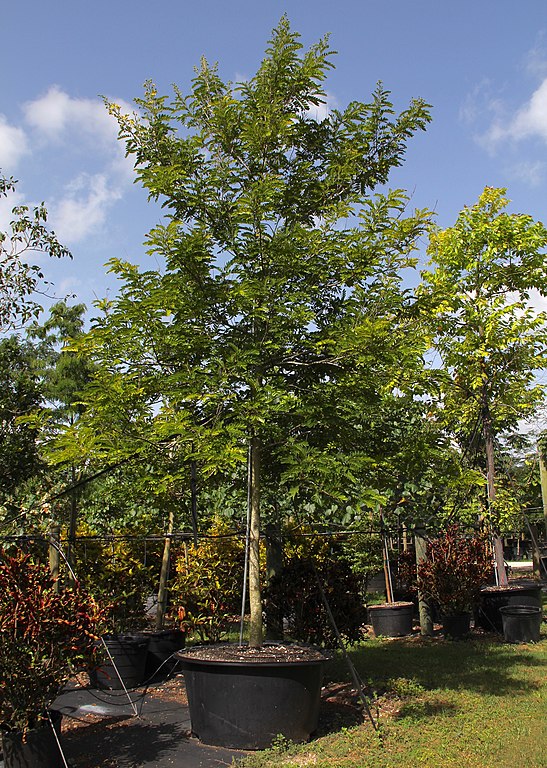
Tipu Tree- Tipuana Tipu
Large spaces. Ornamental, semi-evergreen
This is another nitrogen fixing tree, also known as the Pride of Bolivia. It has a gorgeous umbrella-like canopy and reaches about 35 feet in the desert. It does require plenty of water in the summer to prevent sunburn. It is best grown on a large property, preferably with flood irrigation. In early summer, it produces a yellow/apricot pea shaped flower that attracts beneficial insects.
Image Credit: Treeworld Wholesale [CC BY 2.0]